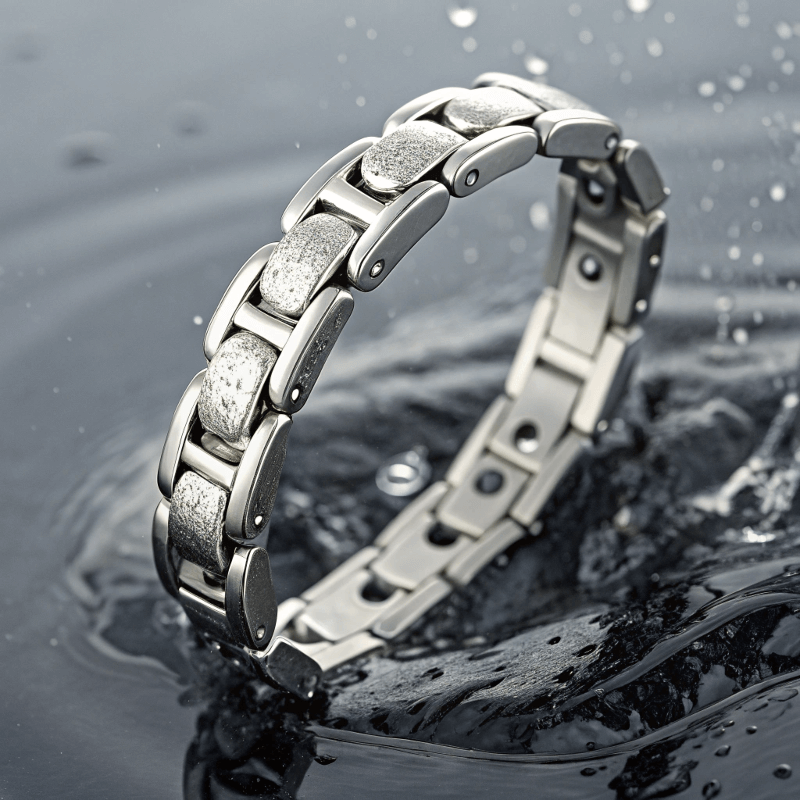
Stainless steel jewelry has become increasingly popular due to its durability, affordability, and stylish appearance. Understanding the process of how this jewelry is manufactured can provide valuable insight into why stainless steel jewelry is such a beloved choice among consumers and why it’s important to choose the right stainless steel jewelry manufacturer. This article will guide you through every step of the stainless steel jewelry manufacturing process, offering a comprehensive overview from the initial sourcing of materials to the final product.

Understanding Stainless Steel as a Material
What is Stainless Steel?
Stainless steel is an alloy composed primarily of iron, carbon, and a significant amount of chromium, which gives it its signature resistance to corrosion and rust. The addition of chromium forms a passive layer of chromium oxide on the surface of the steel, which prevents rust and corrosion by blocking oxygen diffusion to the steel’s surface. This property makes stainless steel an excellent choice for a variety of applications, including jewelry manufacturing.
Stainless steel comes in various grades, each with unique properties that make it suitable for different purposes. For jewelry, the most commonly used grades are 304 and 316L. 304 stainless steel is the most versatile and widely used type of stainless steel, often used in kitchen equipment and industrial applications. However, 316L stainless steel is more popular in jewelry making because of its enhanced resistance to corrosion, particularly from chlorides found in seawater and industrial chemicals, making it ideal for durable and long-lasting jewelry pieces.
Properties of Stainless Steel
The unique properties of stainless steel make it an ideal material for jewelry. Its corrosion resistance ensures that the jewelry will not tarnish or rust, maintaining its appearance over time. This is particularly important for jewelry that is worn daily, as exposure to moisture, sweat, and oils can cause other metals to deteriorate quickly.
Stainless steel is also known for its durability and strength. Unlike softer metals like gold or silver, stainless steel is much harder and can withstand daily wear and tear without easily scratching or bending. This makes it a great option for rings, bracelets, and other jewelry pieces that are exposed to frequent contact and abrasion.
Furthermore, stainless steel is hypoallergenic, meaning it is unlikely to cause allergic reactions. This is a significant benefit for those with sensitive skin or metal allergies, as it allows them to wear stylish jewelry without experiencing irritation or discomfort. The hypoallergenic nature of stainless steel is primarily due to its nickel content being bound in the alloy, preventing it from leaching out and causing skin reactions.
Why Choose Stainless Steel for Jewelry?
When choosing a material for jewelry, factors such as cost, durability, and aesthetic appeal are often considered. Stainless steel stands out because it offers a perfect balance of these qualities. It is significantly more cost-effective than precious metals like gold, platinum, and silver, making it an attractive option for those who want high-quality jewelry without a hefty price tag.
Moreover, the market for stainless steel jewelry has been growing, driven by consumer demand for affordable, durable, and fashionable accessories. Stainless steel jewelry manufacturers have responded to this trend by producing a wide range of designs, from minimalist and contemporary pieces to intricate and ornate styles, catering to diverse tastes and preferences.
In comparison to other metals, stainless steel also offers a unique aesthetic versatility. It can be polished to a high shine, creating a look similar to white gold or platinum, or it can be brushed or matte-finished for a more subdued and modern appearance. This versatility allows stainless steel to complement a wide range of personal styles and fashion trends.
By understanding the properties and advantages of stainless steel, it becomes clear why it is such a popular choice for jewelry manufacturing. Whether you are a wholesaler, distributor, or consumer, knowing these details can help you make informed decisions when choosing stainless steel jewelry.
Ready to dive deeper? Next, we’ll explore how stainless steel is sourced and prepared for use in jewelry manufacturing, setting the stage for the intricate process of crafting these beautiful pieces.
Sourcing and Preparing Stainless Steel
Where Does Stainless Steel Come From?
The journey of stainless steel jewelry begins long before the metal reaches the hands of a skilled artisan. Stainless steel is made primarily from iron ore, chromium, nickel, and other alloying elements that enhance its properties. Iron ore is mined from the earth, typically from large, open-pit mines. This raw material is then transported to steel mills, where it undergoes several processes to transform it into stainless steel.
Chromium is a crucial component in stainless steel production, as it provides the metal with its corrosion-resistant properties. This element is usually sourced from chromite deposits, which are found in various countries around the world, including South Africa, Kazakhstan, India, and Turkey. Nickel, another important alloying element, is sourced from laterite and sulfide deposits, primarily located in Canada, Russia, Australia, and New Caledonia.
Initial Processing of Stainless Steel
Once the raw materials are sourced, they undergo a series of steps to create stainless steel suitable for jewelry making. The initial process involves melting the raw materials in a large electric arc furnace. Here, iron ore is combined with scrap metal and other alloying elements, such as chromium and nickel, at extremely high temperatures. The molten metal is then refined to remove impurities and achieve the desired chemical composition.
After refining, the molten stainless steel is cast into various shapes, such as ingots, billets, or slabs, depending on its intended use. These primary forms are then hot-rolled or cold-rolled to create sheets, bars, or wires, which are the basic materials used in jewelry manufacturing. The rolling process not only shapes the steel but also enhances its strength and ductility, making it easier to work with during the subsequent stages of jewelry production.
Quality Control at the Source
Ensuring the quality of stainless steel is critical for producing high-quality jewelry. Stainless steel jewelry manufacturers must adhere to strict quality control standards to guarantee that the material meets the necessary specifications for jewelry-grade steel. This involves testing the chemical composition, mechanical properties, and surface finish of the steel to ensure it is free from defects and suitable for use in jewelry.
In addition to technical specifications, ethical and environmental considerations play a significant role in sourcing stainless steel. Many manufacturers are committed to sustainable practices, such as using recycled materials and minimizing waste and energy consumption during production. By choosing a reputable stainless steel jewelry manufacturer, buyers can be confident that their products are made from high-quality, ethically sourced materials.
Designing Stainless Steel Jewelry
The Design Process
The design process is where creativity meets precision in stainless steel jewelry manufacturing. Designers play a pivotal role in creating pieces that are not only visually appealing but also functional and comfortable to wear. This process often begins with brainstorming sessions and sketching, where designers explore various concepts and ideas.
With the advancement of technology, computer-aided design (CAD) software has become an indispensable tool in jewelry design. CAD allows designers to create detailed 3D models of their pieces, providing a realistic preview of how the final product will look. This technology also enables designers to make precise adjustments to their designs, ensuring that each piece meets the desired specifications.
Market Research and Trend Analysis
To create jewelry that resonates with consumers, designers must stay informed about the latest fashion trends and market preferences. This involves conducting market research to understand the target audience, including their style preferences, buying habits, and price sensitivity. By analyzing trends and consumer behavior, designers can create collections that appeal to a broad audience, increasing the chances of commercial success.
In addition to fashion trends, cultural influences and seasonal changes can also impact jewelry design. For example, geometric shapes and minimalist designs might be popular during one season, while bold, statement pieces might dominate the market in another. By staying attuned to these shifts, designers can create versatile pieces that align with current trends while maintaining a timeless appeal.
Prototyping
Once a design is finalized, the next step is to create a prototype. Prototyping is a critical phase in the jewelry manufacturing process, as it allows designers and manufacturers to test the feasibility of a design before mass production. Various methods can be used to create prototypes, including traditional handcrafting techniques and modern 3D printing technology.
3D printing, in particular, has revolutionized the prototyping process, enabling designers to create highly detailed and accurate models quickly and cost-effectively. This technology allows for rapid iterations and modifications, making it easier to refine designs and address any potential issues before moving to full-scale production.
Crafting the Jewelry: From Design to Prototype
Cutting and Shaping Stainless Steel
Once the prototype is approved, the actual crafting of the jewelry begins. The first step in this process is cutting and shaping the stainless steel to match the desired design. Various techniques are used to cut and shape stainless steel, depending on the complexity of the design and the type of jewelry being produced.
Laser cutting is a popular method for intricate designs, as it allows for precise cuts with minimal material waste. This technique uses a high-powered laser beam to melt or vaporize the stainless steel along the desired path, creating clean, sharp edges. For more straightforward designs, CNC machining might be used. CNC (Computer Numerical Control) machines use computer-controlled tools to cut and shape the metal with exceptional accuracy, ensuring consistent results across multiple pieces.
Molding and Casting
For more complex designs, molding and casting techniques are often employed. One of the most commonly used methods in jewelry making is the lost-wax casting process. In this process, a wax model of the jewelry piece is created and then encased in a plaster mold. The mold is heated, causing the wax to melt and leave a cavity in its shape. Molten stainless steel is then poured into the mold to create the jewelry piece.
Once the metal has cooled and solidified, the mold is broken away to reveal the raw jewelry piece. The piece is then cleaned and polished to remove any rough edges or surface imperfections. Lost-wax casting is particularly useful for creating intricate designs that would be difficult or impossible to achieve through other methods.
Alternative Manufacturing Techniques
In addition to laser cutting and casting, several other manufacturing techniques are used in stainless steel jewelry production. Stamping involves pressing a design onto a flat piece of metal using a die, creating raised or recessed patterns. This method is often used for creating textured surfaces or adding decorative elements to jewelry pieces.
Forging is another traditional technique used in jewelry making. This process involves heating the metal until it becomes malleable and then hammering it into shape. Forging can be used to create strong, durable pieces with a unique, handcrafted appearance. Electroforming is a more modern technique that uses an electrical current to deposit metal onto a mold, creating lightweight and hollow jewelry pieces.
Refining and Assembling the Jewelry Pieces
Polishing and Finishing
Once the jewelry pieces are crafted, they undergo a series of polishing and finishing processes to achieve the desired appearance and feel. Polishing is a critical step in stainless steel jewelry manufacturing, as it enhances the metal’s natural luster and creates a smooth, shiny surface. Various polishing techniques can be used, depending on the desired finish.
A high polish finish is achieved by buffing the jewelry with a series of progressively finer abrasive compounds, resulting in a mirror-like shine. For a more subdued appearance, a brushed finish can be applied, which involves using a wire brush or abrasive pad to create fine lines on the surface of the metal. Matte finishes are also popular, achieved by sandblasting or using a coarse abrasive to create a non-reflective surface.
Setting Stones and Additional Components
Many stainless steel jewelry pieces are enhanced with the addition of gemstones, enamel, or other decorative elements. The process of setting stones in stainless steel can be more challenging than in softer metals like gold or silver due to the hardness of the metal. However, several techniques have been developed to securely set stones in stainless steel jewelry.
Prong settings involve bending small metal claws around the gemstone to hold it in place, while bezel settings encase the stone in a metal rim for a sleek, modern look. For smaller stones or intricate designs, pavé settings may be used, where multiple stones are set closely together with small beads of metal holding them in place. In some cases, adhesives may be used to secure stones or other components, but mechanical settings are generally preferred for their durability and longevity.
Assembling Jewelry Pieces
The final step in the manufacturing process is assembling the various components into a finished piece of jewelry. This might involve soldering different parts together, attaching clasps and closures, or linking chains and other elements. Precision and attention to detail are crucial during assembly to ensure that each piece is both beautiful and functional.
Quality control checks are performed throughout the assembly process to identify and correct any defects or inconsistencies. This ensures that each piece meets the high standards set by the stainless steel jewelry manufacturer and is ready for the final polishing and finishing touches.
Surface Treatments and Enhancements
Types of Surface Treatments
To enhance the appearance and durability of stainless steel jewelry, various surface treatments can be applied. Physical Vapor Deposition (PVD) coating is a popular method used to add color and improve the wear resistance of stainless steel jewelry. In this process, a thin layer of material, such as titanium nitride or zirconium, is deposited onto the surface of the jewelry using a vacuum chamber. PVD coatings are highly durable and can create a range of colors, from gold and rose gold to black and blue.
Rhodium plating is another common surface treatment used to enhance the appearance of stainless steel jewelry. Rhodium is a precious metal that is highly reflective and resistant to tarnish, making it an excellent choice for creating a bright, shiny finish. Rhodium plating is often used on stainless steel jewelry to create a look similar to white gold or platinum.
Engraving and Texturing
Personalization is a significant trend in jewelry, and stainless steel is well-suited for engraving due to its hardness and durability. Laser engraving is a precise method that uses a high-powered laser to etch designs or text onto the surface of the jewelry. This technique allows for intricate patterns and fine details, making it ideal for customizing pieces with names, dates, or meaningful symbols.
In addition to engraving, various texturing techniques can be used to create unique patterns and finishes on stainless steel jewelry. Hammered finishes involve striking the metal with a hammer to create a dimpled surface, while sandblasting uses high-pressure air and abrasive particles to create a rough, matte texture. These techniques add visual interest and depth to the jewelry, making each piece truly one-of-a-kind.
Ensuring Longevity and Durability
To ensure that stainless steel jewelry maintains its appearance and durability over time, rigorous testing and quality control measures are implemented. These tests assess the jewelry’s resistance to wear, tarnish, and corrosion, ensuring that it can withstand daily wear and exposure to various environmental factors. By using high-quality materials and advanced manufacturing techniques, stainless steel jewelry manufacturers can create pieces that are not only beautiful but also long-lasting.
Quality Control and Assurance
Standards and Regulations
The manufacturing of stainless steel jewelry must adhere to strict standards and regulations to ensure product safety and quality. International standards, such as those set by the International Organization for Standardization (ISO) and the American Society for Testing and Materials (ASTM), provide guidelines for the composition, mechanical properties, and performance of stainless steel used in jewelry.
Compliance with these standards is essential for stainless steel jewelry manufacturers to gain market acceptance and meet consumer expectations. For example, in the European Union, jewelry must be certified as nickel-free to prevent allergic reactions, while in the United States, manufacturers must comply with the Consumer Product Safety Improvement Act (CPSIA), which sets limits on the presence of harmful substances in jewelry.
Inspection Processes
Quality control is a critical aspect of the stainless steel jewelry manufacturing process. Throughout production, each piece undergoes multiple inspections to ensure it meets the required specifications and quality standards. These inspections may include visual checks for surface defects, measurements to verify dimensions, and tests for strength and durability.
Non-destructive testing (NDT) methods, such as X-ray fluorescence (XRF) and ultrasonic testing, are often used to detect hidden flaws or inconsistencies in the metal. By identifying and addressing potential issues early in the manufacturing process, manufacturers can reduce waste, improve efficiency, and ensure that each piece of jewelry meets the highest standards of quality.
Final Approvals and Certifications
Before stainless steel jewelry can be shipped to customers, it must undergo a final quality check and receive the necessary certifications. This process includes a thorough inspection of each piece to ensure it meets all design specifications and quality standards. Once the jewelry passes this final inspection, it is certified and approved for sale.
Certifications play a crucial role in building trust with customers and demonstrating a commitment to quality and safety. By choosing a stainless steel jewelry manufacturer that adheres to rigorous quality control standards and obtains the necessary certifications, buyers can be confident that they are purchasing high-quality, safe, and reliable products.
Packaging and Distribution
Packaging Options for Stainless Steel Jewelry
Packaging is an important consideration in the stainless steel jewelry manufacturing process, as it protects the jewelry during shipping and enhances its presentation. Various packaging options are available, ranging from simple pouches and boxes to elaborate gift packaging. The choice of packaging depends on factors such as the target market, brand image, and cost considerations.
Sustainable packaging options are becoming increasingly popular in the jewelry industry, as consumers and businesses alike seek to reduce their environmental impact. Many manufacturers now offer packaging made from recycled materials or biodegradable alternatives, demonstrating a commitment to sustainability and responsible business practices.
Distribution Channels
Stainless steel jewelry manufacturers use various distribution channels to reach their customers, including wholesale, direct-to-consumer, and online platforms. Wholesale distribution involves selling jewelry in bulk to retailers, who then sell the products to end consumers. This approach allows manufacturers to reach a broad audience and achieve economies of scale.
Direct-to-consumer distribution, on the other hand, involves selling jewelry directly to customers through branded websites, social media, and pop-up shops. This approach allows manufacturers to build a strong brand identity, engage directly with customers, and maintain control over pricing and distribution.
Online platforms, such as Amazon, Etsy, and Alibaba, provide another avenue for manufacturers to reach a global audience. These platforms offer a convenient and cost-effective way for manufacturers to sell their products to customers worldwide, often without the need for a physical storefront.
Marketing and Sales Strategies
Effective marketing and sales strategies are essential for success in the stainless steel jewelry market. Manufacturers must employ a mix of traditional and digital marketing techniques to reach their target audience and drive sales. This may include advertising, public relations, influencer partnerships, and social media marketing.
By leveraging the power of social media, manufacturers can engage with customers, showcase new products, and build brand loyalty. Influencer partnerships, in particular, can help reach a wider audience and generate buzz around new collections. By collaborating with influencers who align with their brand values and target audience, manufacturers can create authentic and engaging content that resonates with consumers.
Sustainability in Stainless Steel Jewelry Manufacturing
Environmental Impact of Stainless Steel Production
While stainless steel is a durable and long-lasting material, its production does have an environmental impact. The extraction and processing of raw materials, such as iron ore, chromium, and nickel, consume significant amounts of energy and water, resulting in greenhouse gas emissions and other environmental pollutants.
However, stainless steel is highly recyclable, and the use of recycled materials can significantly reduce its environmental footprint. Many stainless steel jewelry manufacturers are committed to sustainability and use recycled stainless steel in their products, reducing the demand for virgin materials and minimizing waste.
Sustainable Practices in Jewelry Making
Sustainable practices in jewelry manufacturing extend beyond the use of recycled materials. Manufacturers are increasingly adopting eco-friendly processes and technologies to reduce their environmental impact. This may include using energy-efficient machinery, implementing water and waste management systems, and sourcing raw materials from ethical suppliers.
Certifications and labels, such as the Responsible Jewellery Council (RJC) certification and Fairmined gold certification, help manufacturers demonstrate their commitment to sustainability and ethical business practices. These certifications provide assurance to customers that the jewelry they purchase is made in an environmentally and socially responsible manner.
Future Trends in Sustainable Jewelry
As consumer awareness of environmental and social issues continues to grow, demand for sustainable jewelry is expected to increase. Emerging technologies and practices, such as carbon-neutral manufacturing, zero-waste production, and blockchain traceability, are set to shape the future of the jewelry industry.
By staying ahead of these trends and adopting sustainable practices, stainless steel jewelry manufacturers can differentiate themselves in a competitive market and appeal to a growing base of environmentally conscious consumers.
Conclusion
Stainless steel jewelry has carved a niche for itself in the world of fashion, thanks to its durability, affordability, and versatility. The process of manufacturing stainless steel jewelry is a complex and intricate journey, from sourcing raw materials and designing unique pieces to crafting, polishing, and finishing the final product. By understanding this process, wholesalers, distributors, and consumers can appreciate the craftsmanship and attention to detail that goes into creating each piece of stainless steel jewelry.
As the market for stainless steel jewelry continues to grow, manufacturers must remain committed to quality, innovation, and sustainability. By choosing a reputable stainless steel jewelry manufacturer, buyers can be confident in the quality and ethical standards of their products, ensuring that each piece of jewelry is not only beautiful but also made to last.
If you found this article informative, feel free to share it with others who might be interested in learning more about stainless steel jewelry manufacturing. Have any questions or thoughts? Leave a comment below, and let’s keep the conversation going!