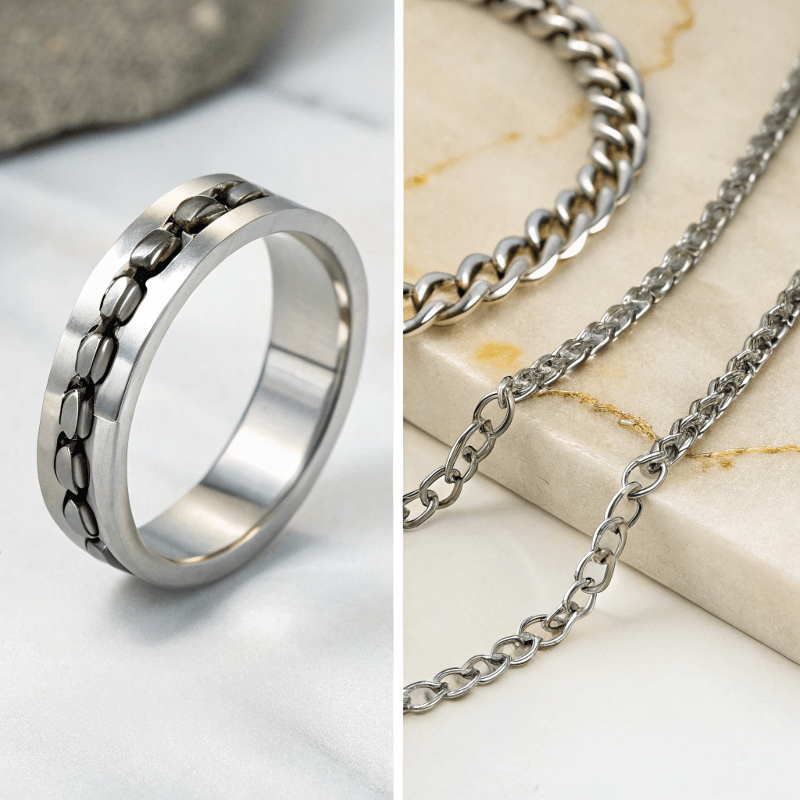
Are you struggling to decide between stainless steel and titanium jewelry? It’s a common dilemma, and while both materials have their advantages, they serve different needs in the jewelry market.
Let’s dive right into the key differences between stainless steel and titanium jewelry and help you determine which one fits your business needs best.
Choosing the right material for jewelry isn’t just about looks—it’s about durability, weight, cost, and more. Whether you’re designing pieces for your brand or selecting items for resale, it’s important to understand the differences between stainless steel and titanium.

1. What Are Stainless Steel and Titanium Jewelry?
What is the difference between stainless steel and titanium in jewelry?
Stainless steel and titanium jewelry may look similar at first glance, but their composition and characteristics set them apart. Both are metals widely used in jewelry, but they each have unique benefits and drawbacks that make them suitable for different applications.
What are the unique qualities of stainless steel and titanium jewelry?
Stainless steel is a popular choice due to its strength, corrosion resistance, and affordability. Titanium, on the other hand, is prized for its lightweight, durability, and hypoallergenic properties. Here’s a closer look at each metal.
Stainless Steel Jewelry
Stainless steel is composed of iron, carbon, and other metals, with a high percentage of chromium. This gives it its well-known resistance to rust and corrosion, making it ideal for long-lasting pieces.
Titanium Jewelry
Titanium is a naturally occurring metal known for its strength-to-weight ratio. It’s lighter than stainless steel yet just as durable, making it a perfect option for comfortable, everyday wear.
2. How Does Stainless Steel Jewelry Compare to Titanium in Terms of Durability?
Which is more durable, stainless steel or titanium jewelry?
Both materials are durable, but there are differences in how they hold up over time. Stainless steel is resistant to scratches and tarnishing, but titanium takes durability a step further by being scratch-resistant and more impact-resistant.
What are the factors that influence the durability of stainless steel and titanium jewelry?
The durability of each metal depends on various factors, including environmental conditions and the type of jewelry. For example, titanium jewelry might last longer in harsh environments due to its resistance to extreme temperatures and corrosion.
| Factor | Stainless Steel | Titanium |
|---|---|---|
| Durability | Scratch and corrosion resistant | Highly scratch-resistant |
| Resistance to Wear | Moderate | Exceptional |
| Temperature Resistance | High | Very High |
3. What Are the Key Differences in Weight Between Stainless Steel and Titanium Jewelry?
How do the weights of stainless steel and titanium compare?
One of the key distinctions between stainless steel and titanium jewelry is their weight. Titanium is significantly lighter than stainless steel, which makes it a better option for larger jewelry pieces like bracelets and rings, where comfort is a priority.
Does weight affect the comfort of wearing jewelry?
Yes, it certainly does! For example, a titanium ring will feel much lighter on the finger compared to a stainless steel ring of the same size, making it more comfortable for prolonged wear.
| Metal Type | Weight Comparison | Comfort Level |
|---|---|---|
| Stainless Steel | Heavier | Moderate |
| Titanium | Lighter | High |
4. How Does Corrosion Resistance Differ Between Stainless Steel and Titanium?
Which metal is more resistant to corrosion?
Titanium has a natural resistance to corrosion, making it ideal for pieces exposed to moisture, such as rings and necklaces. While stainless steel is also corrosion-resistant, it might be more susceptible to corrosion under certain conditions, especially if the surface is scratched.
What makes titanium corrosion-resistant?
Titanium forms a natural oxide layer when exposed to air, which prevents rust and corrosion from setting in. Stainless steel relies on chromium to provide its corrosion resistance, but if this layer is compromised, it can lead to rust.
| Metal Type | Corrosion Resistance | Best Use |
|---|---|---|
| Stainless Steel | Moderate | Everyday wear, dry environments |
| Titanium | High | Jewelry exposed to moisture, saltwater |
5. What Are the Cost Differences Between Stainless Steel and Titanium Jewelry?
Is titanium jewelry more expensive than stainless steel?
Yes, titanium tends to be more expensive due to its rarity and the additional manufacturing processes required to shape it into jewelry. Stainless steel is much more affordable, making it a budget-friendly option for those looking for durable yet inexpensive jewelry.
Why is titanium more expensive?
Titanium is more difficult to work with, which increases its cost. Additionally, the raw material itself is more expensive than stainless steel, contributing to the higher price point for titanium jewelry.
| Metal Type | Cost | Affordability |
|---|---|---|
| Stainless Steel | Low | Budget-friendly |
| Titanium | High | Premium pricing |
6. How Do Stainless Steel and Titanium Jewelry Differ in Terms of Appearance?
Which material looks better for jewelry?
Both metals have their distinct looks. Stainless steel has a polished, shiny finish that can look sleek and modern. Titanium, while also polished, tends to have a matte or darker finish, which appeals to those looking for a more understated or industrial look.
What makes each metal suitable for different designs?
Stainless steel is often used in high-polish designs like watches, while titanium is favored for its more contemporary, matte designs, often seen in wedding bands and minimalist jewelry.
| Metal Type | Appearance | Best Designs |
|---|---|---|
| Stainless Steel | Shiny, high-polish | Watches, rings |
| Titanium | Matte, darker finish | Minimalist, modern designs |
7. What Are the Benefits of Choosing Stainless Steel Jewelry?
What advantages does stainless steel jewelry offer?
Stainless steel is extremely strong and durable, making it an excellent choice for everyday jewelry. It’s also hypoallergenic, affordable, and available in many designs. These benefits make it popular for items like bracelets, necklaces, and earrings.
Why is stainless steel a go-to material for affordable yet durable jewelry?
The low cost and high durability of stainless steel make it a smart choice for jewelry that needs to withstand wear and tear without breaking the bank.
| Benefit | Stainless Steel Jewelry |
|---|---|
| Durability | High resistance to corrosion and wear |
| Cost | Affordable, even for large pieces |
| Variety | Available in various designs and finishes |
8. What Are the Benefits of Choosing Titanium Jewelry?
Why is titanium jewelry considered superior for certain pieces?
Titanium is lightweight, durable, and resistant to corrosion, making it ideal for items that require comfort and longevity, like wedding bands and engagement rings. Its hypoallergenic properties also make it a safe choice for sensitive skin.
What makes titanium suitable for sensitive skin?
Titanium is naturally hypoallergenic, meaning it is unlikely to cause allergic reactions or irritations, even for those with sensitive skin.
| Benefit | Titanium Jewelry |
|---|---|
| Durability | Extremely durable, resistant to scratches |
| Comfort | Light and comfortable for everyday wear |
| Hypoallergenic | Ideal for sensitive skin |
9. Which Metal Is Better for Hypoallergenic Jewelry?
Why is titanium considered better for hypoallergenic jewelry?
When it comes to hypoallergenic jewelry, titanium stands out as the clear winner. While stainless steel is generally safe for most people, titanium is known for its superior hypoallergenic properties. It is less likely to cause allergic reactions, making it the go-to choice for those with sensitive skin.
What makes titanium hypoallergenic?
Titanium is a biocompatible material, meaning it is well-tolerated by the human body. It does not react with body acids, unlike some metals that may cause irritation. This makes it especially suitable for people who suffer from metal allergies, such as reactions to nickel.
| Metal Type | Hypoallergenic Qualities | Suitable For |
|---|---|---|
| Stainless Steel | May contain nickel | Most people, but some may react |
| Titanium | Naturally hypoallergenic | People with sensitive skin |
10. How Do Both Metals Handle Heat and Extreme Conditions?
How do stainless steel and titanium handle extreme conditions?
Both metals are known for their durability in harsh environments, but titanium excels when it comes to withstanding extreme heat and corrosive conditions. Stainless steel can handle most temperatures, but titanium’s resistance to heat and oxidation makes it suitable for more demanding environments.
Which metal performs better under extreme conditions?
Titanium’s ability to resist heat makes it a better choice for high-performance environments or applications where exposure to extreme temperatures or chemicals is common. Stainless steel also performs well but might not withstand severe conditions as effectively as titanium.
| Metal Type | Heat Resistance | Extreme Condition Suitability |
|---|---|---|
| Stainless Steel | High | Suitable for everyday use |
| Titanium | Very High | Ideal for harsh, high-temp environments |
11. What Are the Maintenance Requirements for Stainless Steel Jewelry?
How should you care for stainless steel jewelry?
Stainless steel jewelry is relatively easy to maintain. To keep it looking its best, simply clean it regularly with a soft cloth and mild soap. Avoid harsh chemicals, and store your jewelry in a safe place to prevent scratches.
What are the key maintenance steps for stainless steel?
Regular cleaning with a cloth is enough for most stainless steel jewelry. Occasionally, you can use a mild detergent or jewelry cleaner. If your piece has a shiny finish, a polishing cloth can restore its gleam.
| Maintenance Tip | Stainless Steel Jewelry |
|---|---|
| Cleaning Method | Soft cloth, mild soap, mild detergent |
| Storage | Store in a jewelry box to avoid scratches |
| Polishing | Use a polishing cloth for shine |
12. What Are the Maintenance Requirements for Titanium Jewelry?
How do you care for titanium jewelry?
Titanium jewelry is low-maintenance due to its resistance to tarnishing and scratching. It can be cleaned with soap and water, and occasionally, a polishing cloth can be used to remove any dirt or smudges that accumulate.
Why is titanium easier to maintain?
Titanium’s naturally tarnish-resistant properties reduce the need for frequent cleaning and polishing. Unlike stainless steel, which may develop surface scratches over time, titanium maintains its appearance for longer.
| Maintenance Tip | Titanium Jewelry |
|---|---|
| Cleaning Method | Soap and water, soft cloth |
| Resistance to Tarnish | Very high, requires less upkeep |
| Polishing | Occasionally use a polishing cloth |
13. How Do Stainless Steel and Titanium Jewelry Compare in Terms of Customization?
Which metal is better for customized jewelry?
Both stainless steel and titanium can be customized, but titanium is slightly more difficult to work with due to its hardness. Stainless steel is easier to shape, engrave, and finish, making it a popular choice for intricate designs or custom engraving.
What makes each metal suitable for customization?
Stainless steel’s versatility makes it ideal for custom pieces like engravings and unique designs. Titanium, while more challenging to work with, offers a unique, durable option for personalized jewelry that can withstand wear and tear.
| Metal Type | Customization Capabilities | Ease of Customization |
|---|---|---|
| Stainless Steel | Engraving, shaping, versatile designs | Easy to customize |
| Titanium | Engraving, special designs | More difficult to customize |
14. What Are the Environmental Considerations for Stainless Steel and Titanium Jewelry?
Which metal is more environmentally friendly, stainless steel or titanium?
Titanium is often considered more environmentally friendly because it’s abundant in the Earth’s crust and requires less energy to produce compared to stainless steel. However, stainless steel is also recyclable, which reduces its overall environmental impact.
What makes titanium more eco-friendly?
Titanium’s production process generally uses less energy, and since it’s more abundant, its mining has less environmental impact. While stainless steel is highly recyclable, it often requires more energy to produce and refine.
| Metal Type | Environmental Impact | Recycling Capabilities |
|---|---|---|
| Stainless Steel | High energy consumption in production | Highly recyclable |
| Titanium | Low energy consumption in production | Recyclable, less impact |
15. Which Metal Is Better for Everyday Jewelry: Stainless Steel or Titanium?
Which metal should I choose for everyday jewelry?
When it comes to everyday wear, titanium is often the better choice. It is lightweight, comfortable, and resistant to scratches and tarnish. Stainless steel, while durable and affordable, is heavier and can become scratched over time.
Why is titanium the better choice for daily wear?
Titanium’s comfort and durability make it ideal for daily use, especially for those who prefer lightweight pieces. It’s also less prone to tarnishing, making it low-maintenance, perfect for those who want jewelry that can withstand daily activities.
| Metal Type | Everyday Wear Suitability | Comfort Level | Durability |
|---|---|---|---|
| Stainless Steel | Good, but heavier | Moderate | High |
| Titanium | Excellent, lightweight | Very High | Very High |
Conclusion
In summary, both stainless steel and titanium have their strengths and weaknesses when it comes to jewelry. Stainless steel is affordable, durable, and widely used, while titanium is lightweight, corrosion-resistant, and hypoallergenic, making it ideal for sensitive skin. The choice between the two ultimately depends on the specific needs of your customers and the type of jewelry you’re creating. Whether you’re looking for affordable durability or lightweight comfort, both materials offer unique benefits that can cater to various styles and preferences.
FAQ Section
Q1: What is the difference between stainless steel and titanium jewelry?
Stainless steel is heavier, more affordable, and durable, while titanium is lighter, more hypoallergenic, and more resistant to scratches and tarnish.
Q2: How does titanium jewelry compare to stainless steel in terms of weight?
Titanium jewelry is significantly lighter than stainless steel, making it more comfortable for everyday wear, especially for larger pieces.
Q3: Which is better for sensitive skin, stainless steel or titanium?
Titanium is naturally hypoallergenic and less likely to cause skin irritation compared to stainless steel, which may contain nickel.
Q4: Is titanium jewelry more expensive than stainless steel?
Yes, titanium jewelry is typically more expensive due to the material’s rarity, strength, and more complex manufacturing processes.
Q5: How should I maintain my stainless steel or titanium jewelry?
Stainless steel jewelry requires occasional cleaning with a soft cloth and mild soap, while titanium requires less maintenance due to its resistance to tarnish and corrosion.