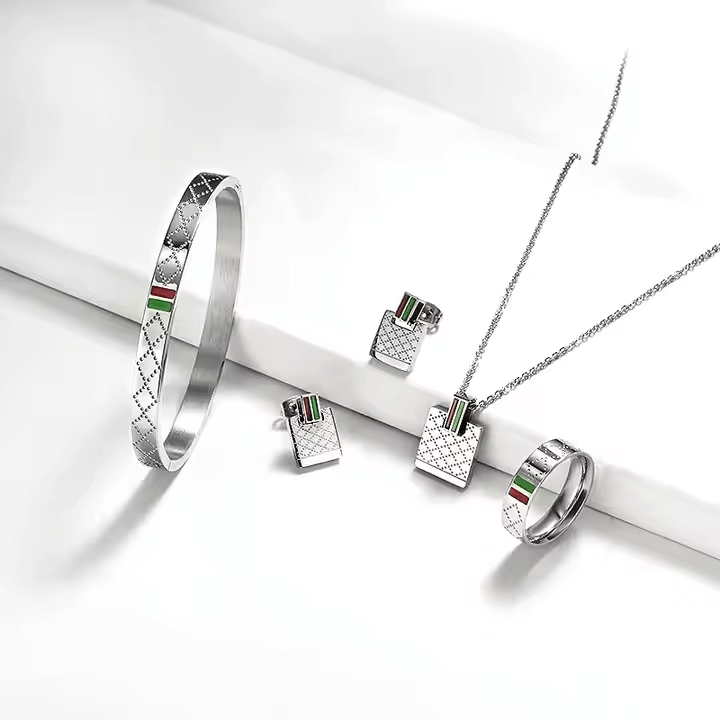
The pouring takes seconds. The decisions that protect the result take much longer.
The pouring moment is the part of stainless steel jewelry casting that people remember. Molten metal enters a ceramic shell, and within a few seconds, the operation is over. It is easy to look at that moment and wonder why a casting project needs so much preparation.
We hear this question from customers at DG Jewelry: why does stainless steel jewelry casting take so long? To answer it, we need to look beyond the pouring itself. Much of the work happens before there is any metal to inspect. Engineers make decisions about the design. Technicians check the physical model and individual wax patterns. The ceramic shell goes through repeated coating and drying. After pouring, the casting still needs cooling, shell removal, separation, and another inspection.
For a jewelry buyer, the useful question is where that time goes, what it controls, and how it affects the next stage of production. A longer schedule does not automatically mean a better product. A shorter schedule does not automatically mean corners have been cut. The explanation behind the schedule matters.
1. A delivery estimate should explain more than a number
Two factories may quote different production times for the same jewelry design. They may be working with different equipment, mold options, inspection routines, production loads, or finish requirements. They may also be estimating different parts of the project.
A new design that still needs engineering review and tooling is different from a repeat order with an approved model and an established production route. Casting blanks are also different from finished jewelry that has been polished, plated, assembled, inspected, and packed.
Before comparing lead times, buyers should establish what each estimate includes. Does it cover design evaluation and mold development? Does it begin after sample approval? Does it end at the casting blank or at the finished product? Without those boundaries, the numbers may describe different jobs.
A useful lead-time estimate tells you what must happen before the next stage can begin.
2. Some of the most important casting work happens before production
A complete 3D drawing is an important starting point. It still needs to be evaluated as a design that molten stainless steel must fill, that technicians must separate from the casting tree, and that the finishing team must work on afterward.
At DG Jewelry, that review includes wall thickness, sharp corners, deep details, internal spaces, shrinkage allowance, functional areas, and the overall structure. Gate planning is particularly important. The position and size of the gates influence how metal enters the ceramic cavity and whether it can fill the design successfully. Unsuitable choices can contribute to incomplete filling, porosity, shrinkage defects, or cracks.
This requires judgment about the individual piece. A feeding arrangement that works for one pendant may not suit another design with different thicknesses or internal features. The team also needs to consider how the connection points will be removed and whether the piece can be cleaned and inspected afterward.
For buyers, this is a useful sign of engineering involvement: the factory can explain why it recommends a particular production route and which parts of the design need attention. These discussions are easier to have before the model and tooling are finalized.
3. Finding a defect early changes how much work it costs
Quality problems become more expensive as a piece moves through production. By the time a casting reaches polishing, the factory has already invested work in its model, wax pattern, shell, pouring, cooling, and separation. A defect discovered there may mean spending further time on correction or rejecting the piece.
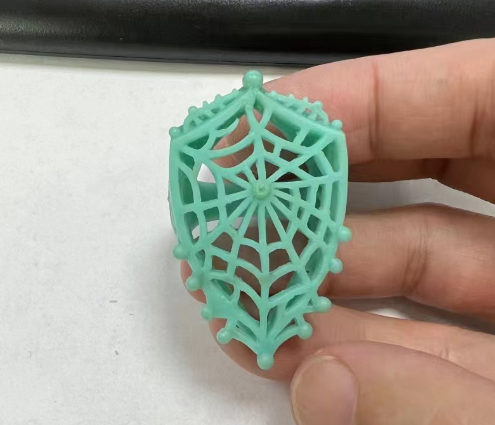
This is why the earlier versions of a design deserve careful attention. The master model is its first physical version. At DG Jewelry, key dimensions and details are compared with the approved 3D design, shrinkage allowance is checked, and experienced technicians refine the model before it moves forward.
The same principle applies to wax patterns. A wax pattern is temporary, but its imperfections can be reproduced in metal. Parting lines, small flaws, and incomplete details need to be addressed while the material is still wax.
A defect found in wax can be corrected before more labor and material are committed to it.
Our process includes repair and inspection of each wax pattern before it is assembled into a wax tree. Producing hundreds of pieces therefore means repairing and checking hundreds of patterns. This is a repeated task, even after the design has been approved.
It does not make later inspection unnecessary. It gives the team an earlier opportunity to stop an unsuitable pattern from moving forward. When discussing quality control with a supplier, buyers can ask where defects are found, what gets checked individually, and what happens to a piece that does not meet the requirement.
4. The fastest option is not always the most suitable option
Mold selection shows why production time needs to be discussed alongside the design. In our process, the team evaluates whether a rubber mold or a steel wax injection mold is more suitable for the product.
For some products in our workflow, a rubber mold may release a wax pattern in about one to two minutes, while a steel mold may take five to six minutes or longer. These are examples from our process, not fixed cycle times for every design or factory. The steel mold may offer an advantage when deformation control and repeatability are important to the piece.
That does not mean every product needs a steel mold. The recommendation should account for structure, quality requirements, time, and cost. Choosing a slower option without a product-specific reason does not add value. Choosing the fastest option without considering its suitability can create difficulties later.
Buyers can help by making their priorities clear: which dimensions are critical, which details must be retained, what finish is expected, and when samples are needed. A useful factory recommendation connects those requirements to the proposed method.
5. Some time belongs to the process itself
Ceramic shell building makes an important distinction visible: hands-on working time and elapsed process time are different. Applying a coating is an operation. Allowing that coating to dry sufficiently is a condition that must be met before the next layer is applied.
DG Jewelry uses a zircon-based ceramic slurry in this stage. Our workflow usually involves six coating cycles, with drying between layers under controlled humidity, airflow, and temperature. The shell must be prepared to withstand the demands of heating and metal pouring. Moisture remaining in an insufficiently dried layer can cause problems during heating.
The number of layers is only part of the explanation. Buyers should also understand how the factory controls drying and determines when the shell is ready to move forward. Six rushed cycles do not tell the same story as six properly controlled cycles.
The time between operations can be part of making the product correctly.
The completed shell then goes through dewaxing and firing before pouring. After pouring, the stainless steel solidifies, but the shell and casting still require cooling before the next operation. In DG Jewelry’s described workflow, shells are normally left at room temperature for three days or longer, with the schedule adjusted to the product and production conditions.
This describes our handling schedule. It does not mean the steel stays liquid for three days, or that every stainless steel jewelry casting process must use the same interval. Factories may use different equipment and procedures. The relevant question is how each factory decides the casting is ready for shell removal and what checks support that decision.
6. A casting blank is a checkpoint, not a finished product
Removing the ceramic shell reveals a stainless steel casting tree. The pieces still need to be separated from the sprue system. Once cut apart, they are casting blanks, with further work required before they become finished jewelry.
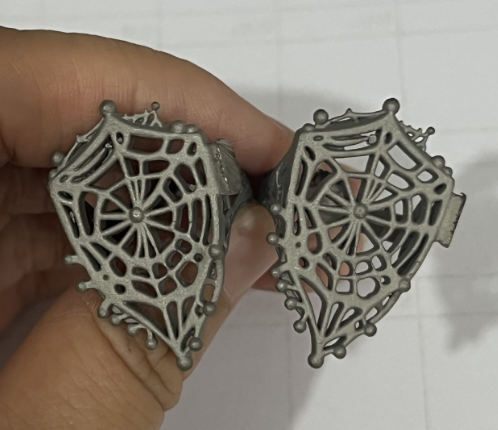
At DG Jewelry, the separated blanks are inspected before they proceed to gate removal, polishing, and later inspection. This checkpoint matters because finishing adds more labor to each piece. An unsuitable blank should be identified before that additional work is committed.
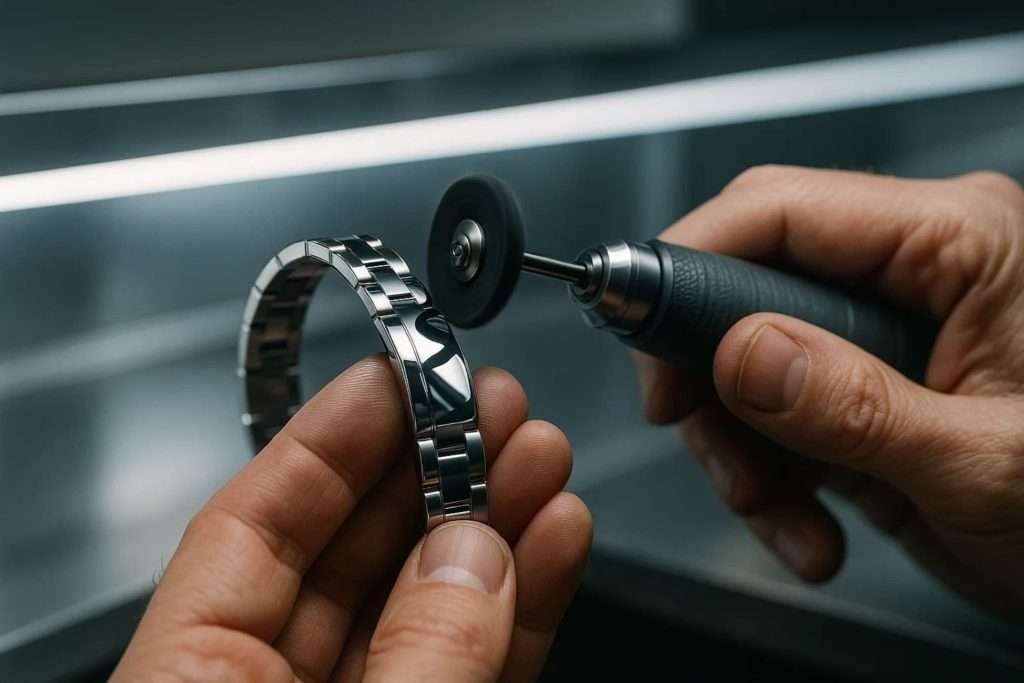
Finish requirements also change the schedule. A high-standard surface may need repeated grinding and polishing, while another design may call for a different finish. An estimate for an as-cast piece cannot be treated as an estimate for polished and fully finished jewelry.
For a custom project, the approved sample should help establish the expected result. Buyers and the factory need a shared understanding of dimensions, visible details, surface finish, and inspection requirements before evaluating production against that standard.
7. What buyers should ask before comparing casting lead times
Price and delivery time remain important. A clearer view of the production route makes both easier to discuss. Before comparing quotations, ask the factory:
- What does the quoted schedule include? Separate development and tooling from repeat production, and casting blanks from finished jewelry.
- What needs to be confirmed in the design? Ask about structural concerns, gate planning, and any changes recommended before tooling.
- Why is this mold option suitable? Connect the choice to the product’s structure, repeatability, finish expectations, and cost.
- Where are individual pieces checked? Understand the inspection points for models, wax patterns, and casting blanks.
- Which stages need controlled drying or cooling? Ask how readiness for the next operation is established.
- What remains after casting? Confirm the finishing and inspection work needed to reach the approved sample standard.
These questions create a practical conversation about capability. A useful answer connects a step to the risk it controls and explains how it applies to your design. It also makes clear what still needs to be confirmed before a delivery commitment is made.
The time should have a reason
Why does stainless steel jewelry casting take so long? In our workflow, time goes into engineering decisions, physical preparation, repeated inspection, and process conditions that must be met before work continues. Pouring is the visible moment when those preparations come together.
For buyers, that explanation is more valuable than a general promise of speed or quality. You should be able to understand which requirements drive the schedule, what the factory is controlling, and what the quoted endpoint actually means.
At DG Jewelry, our aim is to make those decisions understandable before production begins. If you are developing a custom stainless steel jewelry collection, send your CAD file or reference images, approximate quantity, desired finish, and target schedule. Our team can review the design and discuss a suitable OEM/ODM development route.