Many people today choose 316L stainless steel jewelry for its strength, durability, and low-maintenance beauty. It’s often marketed as “tarnish-free” or “maintenance-free”, leading some to believe it never needs care. The truth is, while 316L stainless steel is one of the easiest jewelry materials to maintain, it still benefits from simple, consistent cleaning and storage.
Taking a few minutes each month to care for your stainless steel jewelry can help it look brand-new for years. This article explains what makes 316L special, why it’s so resistant to corrosion, and what you can do to keep it shining.
Understanding 316L Stainless Steel
316L stainless steel belongs to the austenitic stainless steel family, known for its combination of chromium, nickel, and molybdenum. These elements form a natural, protective layer on the surface that keeps out oxygen and moisture — the main causes of rust.
The “L” in 316L means low carbon, which helps prevent corrosion along welds and edges. That’s why it’s often used in medical tools, surgical implants, and high-end jewelry. In fact, the same steel used for your ring or bracelet might also be found inside hospitals or spacecraft.
Unlike silver or brass, 316L doesn’t tarnish or oxidize easily, and it’s hypoallergenic, which means it’s safe for people with sensitive skin. Its shine lasts longer than plated metals, and its structure is tough enough for daily wear without warping or bending.
Because of this unique blend of properties, 316L is considered a medical-grade steel and is sometimes referred to as surgical steel. Its combination of strength and skin safety makes it a favorite among jewelers and wearers alike.
Why People Love 316L Jewelry
The popularity of 316L stainless steel jewelry isn’t just about durability — it’s also about practical beauty.
Strong and resilient.
This metal can handle the bumps and scrapes of everyday life. It doesn’t bend easily and holds its shape even under stress. That makes it ideal for rings, chains, bracelets, and men’s jewelry.
Affordable elegance.
316L offers the sleek appearance of silver or platinum without the high price tag. You can enjoy the look of luxury without constant upkeep.
Skin-friendly choice.
Because it’s hypoallergenic, 316L stainless steel is often recommended for people who can’t wear silver or gold. It rarely triggers allergic reactions, even during long wear or exercise.
Low maintenance.
Unlike silver, which oxidizes quickly, or brass, which fades and stains, 316L stays bright with minimal care. A gentle clean once in a while is all it takes.
Eco-friendly durability.
Stainless steel can be recycled endlessly without losing quality, making it an excellent choice for sustainable fashion. Long-lasting jewelry also reduces waste — a small but meaningful contribution to a greener lifestyle.
Why “No Maintenance” Is a Myth
Calling 316L “maintenance-free” is a bit misleading. While it’s incredibly resistant to rust and corrosion, everyday exposure to sweat, lotions, and moisture can still leave residue. Over time, this layer of oils and dirt can dull the surface and make your jewelry lose its sparkle.
Even the most durable metals need some attention. Think of it like your car’s paint — it won’t peel overnight, but if you never wash it, dust and grime eventually cover its shine. The same principle applies here: 316L doesn’t need much, but it appreciates care.
Everyday Cleaning Tips
Cleaning your stainless steel jewelry is simple and quick. You don’t need any expensive equipment — just basic household items.
Step 1: Prepare a mild cleaning solution
Mix a few drops of gentle dish soap with warm water. Avoid harsh chemicals or alcohol-based cleaners, as they can harm coatings or leave streaks.
Step 2: Gently clean the surface
Dip a soft cloth or a soft-bristled toothbrush into the water and wipe the jewelry gently. Pay attention to corners and engraved details where dirt tends to collect.
Step 3: Rinse thoroughly
Run the jewelry under clean water to remove any soap residue. Leftover detergent can attract dust or leave a film that dulls the shine.
Step 4: Dry completely
Use a microfiber or lint-free towel. Moisture is the main cause of spots, so make sure it’s fully dry before putting it away.
Tip: If you want extra shine, lightly buff the surface with a jewelry polishing cloth designed for stainless steel. Avoid abrasive pads or silver cleaners — they can scratch the surface.
When to Take It Off
Even though 316L is water-resistant, it’s wise to remove your jewelry in certain situations:
- Swimming pools: Chlorine can react with metals and cause a light film to form.
- Hot springs or spas: Minerals and sulfur in the water can alter the finish.
- Gym sessions: Sweat contains salt, which can dull coatings if left uncleaned.
- Household cleaning: Chemicals like bleach and ammonia may weaken protective layers.
If your jewelry gets wet, wipe it dry with a soft cloth soon after. These small habits can keep your pieces looking fresh for years.Avoiding Scratches and Damage
While 316L is very hard, it’s not completely scratch-proof. Microscopic abrasions can appear over time, especially on polished surfaces like rings or pendants.
Here’s how to prevent unnecessary wear:
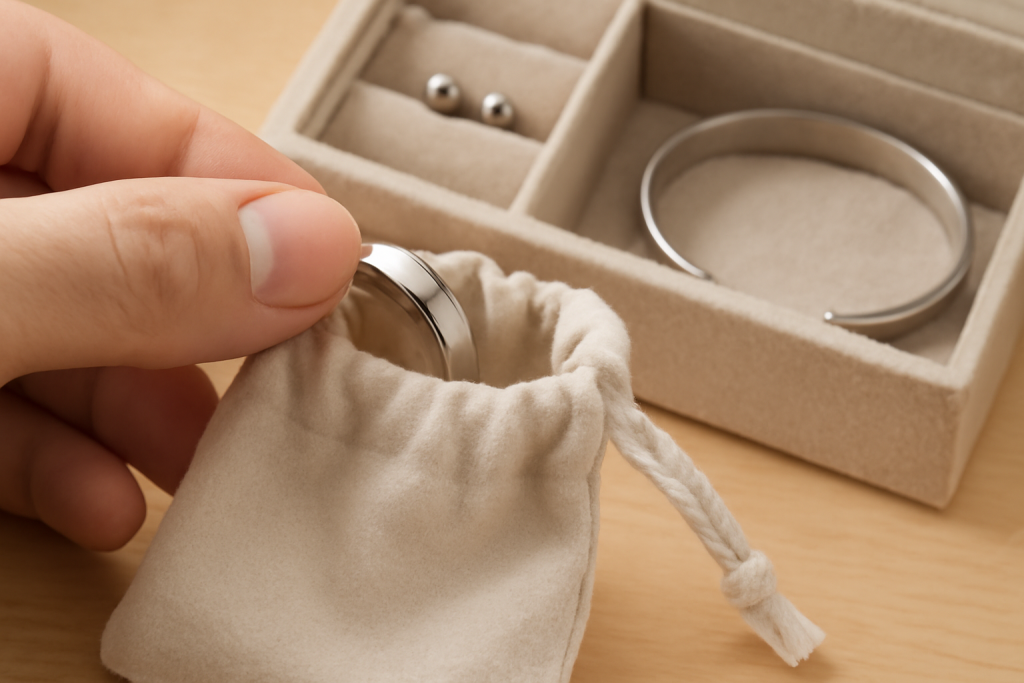
- Don’t store multiple metal pieces together.
- Use individual pouches or compartments.
- Avoid hitting your jewelry against hard surfaces such as gym equipment or countertops.
If you notice light scratches, you can gently buff them out using a fine polishing cloth. Deep scratches may require professional polishing, but this is rarely needed for 316L jewelry.
Special Care for Coated or Colored Jewelry
Some 316L jewelry comes with special finishes like black, gold, or rose-gold tones. These colors are usually applied through PVD (Physical Vapor Deposition), a high-tech vacuum coating method that fuses color onto the metal surface.
Although PVD coatings are stronger than traditional plating, they still benefit from gentle care:
- Avoid friction with rough materials.
- Keep away from alcohol, perfume, or hairspray.
- Clean gently and avoid harsh rubbing.
With proper care, PVD coatings can retain their brilliance for many years without fading.
Common Myths About Stainless Steel Jewelry
Myth 1: “It never rusts.”
While 316L is highly corrosion-resistant, no metal is completely immune. Extreme exposure to salt, acid, or chlorine can eventually cause small dull patches.
Myth 2: “It doesn’t need cleaning.”
Even if it looks clean, oils and dirt can build up. Regular cleaning helps preserve shine and hygiene.
Myth 3: “Any cleaner will work.”
Avoid abrasive products, silver polish, or toothpaste — these can scratch the protective surface. Always use mild soap and soft fabrics.
Myth 4: “All stainless steels are the same.”
Not true. 316L is a higher-grade alloy compared to 304 or standard stainless steel. It’s specifically designed for environments that require biocompatibility and long-term durability.
How Often Should You Clean It?
For most wearers, a monthly cleaning is enough. If you wear your jewelry daily, wipe it after workouts or showers. That’s usually enough to remove sweat and maintain shine.
For pieces you wear less often, clean them before storing. Over time, even unused jewelry can collect dust and body oils.
Proper Storage Practices
Good storage is part of good care. The way you store your jewelry directly affects its lifespan.
- Use soft pouches, fabric-lined boxes, or individual compartments.
- Keep it in a cool, dry place away from humidity.
- Don’t keep it near perfumes or chemicals.
- For long-term storage, wrap it in a microfiber cloth to prevent scratches.
If you live in a humid area, consider adding a small silica gel pack to your jewelry box — it absorbs moisture and keeps metals dry.
Comparing 316L With Other Jewelry Metals
Understanding how 316L stainless steel compares to other materials can help you appreciate its advantages:
Versus silver: Silver is softer and tarnishes quickly. It requires frequent polishing. 316L keeps its color and shine without oxidation.
Versus gold plating: Gold-plated jewelry can peel or fade over time. 316L, especially with PVD coatings, maintains its appearance far longer.
Versus titanium: Titanium is lighter and hypoallergenic but can scratch more easily and is difficult to resize. 316L offers a balance between weight, cost, and strength.
Versus brass or copper: These metals are prone to discoloration and can leave marks on skin. 316L doesn’t.
In short, 316L stainless steel combines the best of both worlds: affordability and endurance.
Environmental Benefits
Choosing stainless steel isn’t only good for your budget — it’s also a more sustainable option. The material is 100% recyclable, and its long lifespan reduces waste from short-lived fashion jewelry. The energy used to produce stainless steel can be reclaimed, and recycling requires far less energy than mining new metals.
By investing in 316L jewelry that lasts, you help reduce demand for disposable accessories — a small but meaningful step toward responsible consumption.
Everyday Examples of Care
Imagine these simple scenarios:
- After a workout, you notice sweat on your bracelet. You rinse it quickly under warm water, dry it, and it looks brand new.
- Before a beach trip, you remove your necklace to avoid saltwater dulling the shine.
- You store your earrings in a small cloth pouch so they don’t rub against keys or coins in your bag.
These easy habits take less than a minute but make a huge difference over time. Good care doesn’t mean extra work — it just means awareness.
Final Thoughts: Low Maintenance, Not No Maintenance
316L stainless steel jewelry is a wonderful mix of style, strength, and simplicity. It’s designed for modern life — resistant to daily wear, safe for skin, and easy to maintain. But like all good things, it deserves a little care.
A few minutes of cleaning, drying, and safe storage can keep your favorite pieces looking brilliant for decades. Low maintenance doesn’t mean no maintenance — it means smart care with minimal effort.
Whether it’s a ring, bracelet, or pendant, each piece reflects your personality and deserves the same attention you give to anything meaningful. Treat it well, and it will stay part of your story for a long time.
Call to Action
Caring for your jewelry is caring for yourself.
Take a few minutes each month to clean, dry, and store your 316L stainless steel pieces properly — and they’ll keep shining through the years.
Keep it simple. Keep it clean. Keep it shining.
Have you prepared to cooperate with high-quality factories in China?
Partner with DG JEWELRY. Quality stainless steel, tailored for you.
Join our 10000+ clients nowFAQs
What is 316L stainless steel?
316L is a high-grade stainless steel commonly used in jewelry. It is a medical-grade steel, known for its corrosion resistance, strength, and hypoallergenic properties. The “L” stands for low carbon, which makes it more resistant to corrosion, especially in welding areas.
Is 316L stainless steel jewelry safe for sensitive skin?
Yes, 316L stainless steel is hypoallergenic and safe for most people with sensitive skin. Unlike other metals, it is unlikely to cause irritation or allergic reactions, making it a popular choice for jewelry.
How do I clean 316L stainless steel jewelry?
To clean your jewelry, simply mix warm water with a small amount of mild soap. Use a soft cloth or a soft-bristled toothbrush to gently scrub the jewelry, then rinse and dry thoroughly. Avoid harsh chemicals and alcohol-based cleaners as they can damage the finish.
Does 316L stainless steel jewelry tarnish?
316L stainless steel is highly resistant to tarnishing and rust, but like any material, it can develop a dull appearance over time if exposed to sweat, lotions, or harsh chemicals. Regular cleaning can help maintain its shine.
Can I wear 316L stainless steel jewelry in the shower or while swimming?
Although 316L stainless steel is water-resistant, it’s best to remove jewelry when swimming in saltwater or chlorine-treated water (like swimming pools) as prolonged exposure may dull the finish. It’s also a good idea to remove it when taking a shower to avoid contact with soap and shampoo.