1. Why is Cleaning Stainless Steel Jewellery Important?
Maintaining your stainless steel jewellery is crucial for both its longevity and appearance. If neglected, even the finest jewellery can tarnish and lose its shine.
Why should you care about cleaning your stainless steel jewellery?
Regular cleaning not only prevents tarnishing but also enhances its overall appearance. A piece that’s properly cleaned will look new and fresh, showing off the intricate details. If you leave your jewellery dirty for too long, oils, dirt, and grime can lead to corrosion and tarnishing.
Key Benefits of Cleaning Stainless Steel Jewellery
● Keeps the jewellery looking shiny and new.
● Prevents dirt and oils from causing build-up.
● Prolongs the life of your jewellery.
● Removes stubborn stains and tarnish.
Table: Benefits of Regular Cleaning
| Benefit | Description | Result |
|---|---|---|
| Shiny, New Appearance | Regular cleaning removes dirt and tarnish | Jewellery maintains a fresh look |
| Prevents Build-Up | Removes oils and dirt that accumulate over time | Helps to avoid tarnishing and build-up |
| Prolongs Lifespan | Keeps jewellery in optimal condition | Prevents corrosion and wear |
| Stain and Tarnish Removal | Cleaning helps to remove stubborn stains and tarnish | Restores the original shine |
2. What Are the Best Tools for Cleaning Stainless Steel Jewellery?
You don’t need expensive tools to clean stainless steel jewellery. Most of the time, household items will do the job just fine.
What tools should you use for cleaning?
To effectively clean your jewellery, you’ll need a few simple tools:
● Microfiber cloth – Ideal for polishing without scratching.
● Soft-bristled toothbrush – Useful for removing dirt in hard-to-reach spots.
● Gentle soap or dish detergent – Mild enough to clean without damaging the jewellery.
● Baking soda and water – A safe alternative for removing tarnish.
Tools to Avoid
While many tools can help with cleaning, some can scratch or damage the surface of your jewellery. Avoid:
● Abrasive cloths – These can leave scratches.
● Harsh chemicals – These can wear down the stainless steel surface.
Table: Recommended Cleaning Tools
| Tool | Purpose | Best For |
|---|---|---|
| Microfiber cloth | Polishing and cleaning without scratching | Daily maintenance and polishing |
| Soft-bristled toothbrush | Scrubbing and removing dirt | Cleaning intricate areas or links |
| Dish detergent | Gentle cleaning | Removing dirt, oils, and grime |
| Baking soda and water | Removing tarnish | Deep cleaning to remove stubborn stains |
Best Practices for Using Cleaning Tools
Make sure to use a soft cloth for polishing and never use any hard brushes that can scratch the surface. With the right tools, your stainless steel jewellery will stay in perfect condition.
3. How to Clean Stainless Steel Jewellery at Home?
The good news is that cleaning stainless steel jewellery at home is easy and doesn’t require expensive professional cleaning services.
Step-by-Step Cleaning Guide
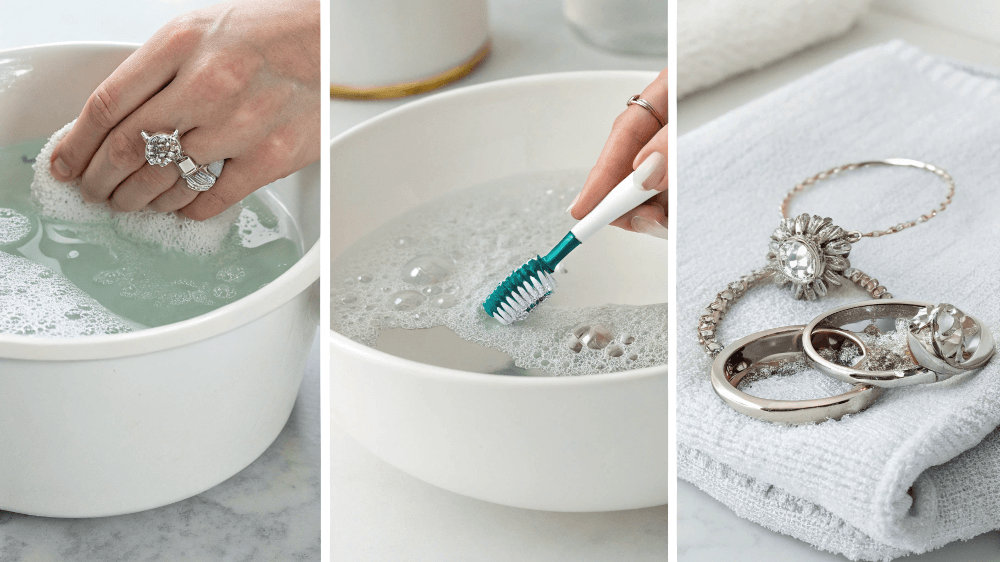
- Prepare a Cleaning Solution
Mix a small amount of mild dish soap with warm water in a bowl. - Soak the Jewellery
Let your jewellery sit in the solution for a few minutes. This will loosen any dirt or oils. - Scrub Gently
Use a soft-bristled toothbrush to gently scrub the jewellery, especially in areas that are harder to reach. - Rinse and Dry
Rinse the jewellery under clean water and use a microfiber cloth to dry it thoroughly.
Things to Keep in Mind
- Never use too much soap or detergent.
- Always rinse thoroughly to avoid soap residue.
- Dry your jewellery immediately after cleaning to avoid water spots.
Table: Home Cleaning Process
| Step | Action | Tools Needed |
|---|---|---|
| Prepare Cleaning Solution | Mix mild soap with warm water | Dish soap, warm water |
| Soak Jewellery | Let jewellery sit in solution to loosen dirt | Bowl or container |
| Scrub Gently | Use a soft-bristled toothbrush to clean intricate areas | Toothbrush (soft bristles) |
| Rinse and Dry | Rinse with water, dry with a microfiber cloth | Clean water, microfiber cloth |
Following these steps will keep your stainless steel jewellery in top condition and prevent the build-up of dirt or tarnish.
4. Can I Use Household Products to Clean Stainless Steel Jewellery?
Yes, household products can be a fantastic option for cleaning stainless steel jewellery. Some of the most effective cleaners are probably already in your kitchen.
Household Products That Work
● Baking Soda – Mix with a little water to form a paste. Apply this to your jewellery with a soft cloth to remove tarnish.
● Vinegar – Soak the jewellery in vinegar for a short time to clean off grime and tarnish.
● Lemon Juice – Known for its natural cleaning power, lemon juice can help shine and clean jewellery.
Why Household Products Work
These products are naturally effective and non-abrasive, meaning they won’t harm your stainless steel jewellery. They also offer an affordable and eco-friendly cleaning solution.
Table: Household Cleaning Products
| Household Product | Purpose | How to Use |
|---|---|---|
| Baking soda | Removes tarnish and stubborn stains | Mix with water, apply paste, scrub gently |
| Vinegar | Breaks down grime and tarnish | Soak jewellery for a few minutes, then scrub |
| Lemon juice | Cleans and shines jewellery | Soak jewellery briefly, scrub gently |
What to Avoid
Stay away from products that contain harsh chemicals or abrasives. These can strip the shine and potentially cause damage to your jewellery.
5. What Are the Best Commercial Products for Cleaning Stainless Steel Jewellery?
For those who prefer a ready-made solution, there are plenty of commercial cleaning products available. These can be more effective for stubborn stains and tarnish.
Recommended Commercial Products
● Jewellery Cleaning Solutions – These products are specifically designed for stainless steel and jewellery.
● Ultrasonic Cleaners – While a bit of an investment, ultrasonic cleaners can remove deep-set dirt and tarnish.
● Polishing Cloths – Pre-treated with cleaning solution, these cloths make it easy to keep your jewellery looking new.
When Should You Use Commercial Products?
Commercial products are best used for heavy tarnishing or when basic cleaning methods don’t achieve the desired results.
Table: Commercial Jewellery Cleaning Products
| Product | Purpose | When to Use |
|---|---|---|
| Jewellery Cleaning Solution | Deep cleaning and tarnish removal | When jewellery has heavy tarnishing or stains |
| Ultrasonic Cleaner | Deep cleaning for hard-to-reach dirt | For intricate pieces or extreme tarnishing |
| Polishing Cloth | Restoring shine and polishing | Regular maintenance to keep jewellery looking new |
By choosing the right commercial product based on the condition of your jewellery, you can easily restore its shine and extend its life.
6. How Often Should I Clean My Stainless Steel Jewellery?
Regular cleaning is key to preserving the beauty of your stainless steel jewellery. It’s important to clean your jewellery at the right frequency to avoid build-up and tarnish.
How Often Should You Clean Your Jewellery?
If you wear your stainless steel jewellery daily, it’s advisable to clean it at least once a month. However, if your jewellery has been exposed to harsh environments or has built-up dirt, it may need more frequent cleaning.
Signs Your Jewellery Needs Cleaning
● Visible tarnish or discoloration
● Accumulation of dirt or grime
● Water spots or stains
● Dullness or lack of shine
By keeping an eye on your jewellery’s condition, you can clean it just before it starts to look worn or tarnished.
Table: Cleaning Frequency and Conditions
| Condition | Cleaning Frequency | Recommended Action |
|---|---|---|
| Daily wear | Once a month | Clean regularly to avoid build-up |
| Exposed to harsh elements | Twice a month or more | Clean more often to maintain shine |
| Light wear (only occasionally) | Once every 3 months | Clean once or twice a year |
| Visible tarnish or grime | Immediately after noticing | Use a deep-cleaning method for stains |
7. How Do I Remove Stubborn Stains from Stainless Steel Jewellery?
Stubborn stains can be tricky, but with the right techniques, you can restore your jewellery to its original shine.
Common Stains on Stainless Steel Jewellery
Stains can come from a variety of sources, including sweat, oils from the skin, makeup, and exposure to environmental elements. Some of the toughest stains include:
● Tarnish – Caused by a reaction with air and moisture.
● Rust – Common in jewellery exposed to water over time.
● Grease and Oil – Often from body oils or cooking.
Effective Methods for Stain Removal
● Baking Soda Paste – Apply a paste made from baking soda and water to the stain. Gently rub with a microfiber cloth, then rinse.
● Vinegar and Water – Soak the jewellery in a mixture of vinegar and water to dissolve stains, then clean with a soft toothbrush.
● Polishing – A jewellery polishing cloth can work wonders for removing light tarnish and stains.
Table: Stain Removal Methods
| Stain Type | Recommended Removal Method | Steps Required |
|---|---|---|
| Tarnish | Baking soda paste | Mix baking soda with water, scrub, rinse and dry |
| Rust | Vinegar and water soak | Soak jewellery, scrub with a soft brush, rinse |
| Grease and Oil | Dish soap with warm water or polishing cloth | Soak, scrub gently with cloth or use a polishing cloth |
Preventing Stains
To avoid stubborn stains, always clean your jewellery after exposure to harsh substances or environments, and store it in a clean, dry place.
8. Is It Safe to Use a Polishing Cloth on Stainless Steel Jewellery?
Polishing cloths are a great tool for keeping your jewellery shiny, but they must be used correctly to avoid damage.
Benefits of Polishing Cloths
Polishing cloths are pre-treated with a cleaning solution that gently removes tarnish without causing damage. They are perfect for regular maintenance, providing a quick shine without harsh abrasives.
Table: Pros and Cons of Polishing Cloths
| Benefit | Details | Best Use Case |
|---|---|---|
| Gentle on jewellery | Removes tarnish without scratching | Regular use to maintain shine |
| Convenient and portable | Easy to use anywhere | Quick clean-ups during daily wear |
| Preserves finish | Prevents deep scratches if used correctly | Keeping jewellery looking polished |
How to Use a Polishing Cloth Safely
Gently rub the cloth over the jewellery, applying minimal pressure. Focus on areas that need extra shine or tarnish removal.
Can Over-Polishing Damage My Jewellery?
Polishing cloths should be used sparingly. Over-polishing can cause minor scratches, especially on highly reflective surfaces. Use a polishing cloth only when necessary to maintain a natural shine.
9. How to Protect Stainless Steel Jewellery from Tarnishing?
Preventing tarnishing is easier than you think. With proper care and storage, you can ensure your stainless steel jewellery stays looking new.
Simple Ways to Protect Your Jewellery
● Store in a Dry Place – Humidity can cause tarnishing. Store your jewellery in a dry, cool place to avoid this.
● Use Anti-Tarnish Bags – These bags are designed to prevent tarnishing by minimizing exposure to air and moisture.
● Avoid Harsh Chemicals – Always remove your jewellery before using cleaning products, perfumes, or lotions.
Protective Coatings
Some stainless steel jewellery pieces come with a protective coating. These coatings can help prevent tarnishing and scratching. However, over time, the coating can wear off, so regular cleaning is still necessary.
Table: Tarnish Prevention Methods
| Prevention Method | Description | Best for |
|---|---|---|
| Anti-tarnish bags | Bags designed to keep jewellery tarnish-free | Storing jewellery during long periods of non-use |
| Storing in dry place | Keeps jewellery away from moisture | Everyday storage to prevent tarnish |
| Avoiding harsh chemicals | Reduces exposure to corrosive substances | Protecting the surface of jewellery daily |
Preventing Scratches
Store your jewellery separately, away from other pieces, to avoid scratches from contact.
10. What Are the Most Common Mistakes People Make When Cleaning Stainless Steel Jewellery?
Mistakes during the cleaning process can lead to permanent damage. Let’s go over the most common errors to avoid.
Common Cleaning Mistakes
● Using Harsh Chemicals – Harsh cleaners can strip away the protective layer and cause discoloration. Always stick to mild soaps or specially formulated jewellery cleaners.
● Scrubbing Too Hard – Scrubbing with excessive force can cause scratches, especially on polished surfaces. Use a soft touch when cleaning.
● Not Drying Jewellery Properly – Leaving your jewellery wet after cleaning can cause water spots or tarnish. Always dry your jewellery immediately with a soft, dry cloth.
Table: Common Mistakes and Correct Practices
| Mistake | Correct Practice | Resulting Benefit |
|---|---|---|
| Using harsh chemicals | Stick to mild soaps and jewellery cleaners | Preserves the jewellery’s protective layer |
| Scrubbing too hard | Gently scrub with soft brush | Prevents scratches and surface damage |
| Not drying jewellery properly | Dry immediately with a microfiber cloth | Avoids water spots and tarnish |
How to Avoid These Mistakes
Use the right tools, follow the correct cleaning steps, and avoid any shortcuts that could lead to damage.
11. Can I Clean Stainless Steel Jewellery with a Toothbrush?
Yes, a toothbrush is a great tool for cleaning stainless steel jewellery, as long as it’s the right type.
Why a Toothbrush Works
A soft-bristled toothbrush can help reach intricate details, especially in rings or chains with small links. The bristles are gentle enough to avoid scratching the surface while cleaning away dirt and oils.
Table: Toothbrush Cleaning Effectiveness
| Toothbrush Type | Effectiveness for Cleaning | Best Use Case |
|---|---|---|
| Soft-bristled brush | Ideal for delicate surfaces | Cleaning detailed areas like rings or chains |
| Hard-bristled brush | Risk of scratching surface | Not recommended for stainless steel jewellery |
How to Use a Toothbrush Effectively
Dampen the toothbrush with a mild soap solution and gently scrub the jewellery. Be sure to focus on the crevices where dirt and grime tend to collect.
Which Toothbrush is Best?
Choose a toothbrush with soft bristles to prevent scratches. Avoid using a hard-bristled toothbrush, as it can damage the surface of the jewellery.
12. Can Stainless Steel Jewellery Be Repaired After Damage?
Stainless steel is a durable material, but like all metals, it can suffer from wear and tear. The good news is, minor damage can usually be repaired.
Types of Damage That Can Occur
● Scratches – These are common, especially on rings or bracelets.
● Tarnish – Caused by exposure to moisture or chemicals.
● Bent or Misshapen Jewellery – Jewellery that has lost its shape.
Table: Common Damage Types and Repair Options
| Damage Type | Repair Option | Professional Help Required |
|---|---|---|
| Scratches | Buffing with polishing cloth | Optional for light damage |
| Tarnish | Cleaning with mild soap or vinegar | No professional help needed |
| Bent Jewellery | Reshaping or replacing broken parts | Professional jeweller |
How to Fix Scratches
Light scratches can often be buffed out with a polishing cloth. For deeper scratches, a professional jeweller can help restore the surface.
Fixing Tarnish
Tarnish can usually be removed with a gentle cleaning solution or professional polishing.
When to Seek Professional Repair
If your jewellery is severely damaged, such as cracks or deep dents, it’s best to take it to a professional jeweller for repairs.
13. How to Store Stainless Steel Jewellery Properly?
Proper storage is essential to prevent tarnishing and scratching. Let’s explore the best ways to store your stainless steel jewellery.
Best Practices for Storing Jewellery
● Use Soft Pouches – Store each piece in its own cloth pouch to avoid scratches.
● Avoid Storing in Direct Light – Prolonged exposure to sunlight can cause discolouration and fading.
● Use Jewellery Boxes – A jewellery box with separate compartments helps protect each piece.
Table: Best Jewellery Storage Practices
| Storage Method | Benefits | Ideal For |
|---|---|---|
| Soft pouches | Prevents scratches and tarnishing | Individual jewellery pieces |
| Jewellery boxes | Organizes jewellery and keeps pieces separated | Daily wear or occasional jewellery storage |
| Avoiding direct light | Protects from fading and discoloration | Long-term storage of valuable jewellery |
Why is Storage Important?
Proper storage prevents exposure to elements like humidity, which can cause tarnishing. It also helps prevent scratches from contact with other jewellery.
14. Are There Special Considerations for Cleaning Stainless Steel Jewellery with Gemstones?
Cleaning stainless steel jewellery with gemstones requires special care. Gemstones are more delicate than stainless steel, so you’ll need to take extra precautions.
How to Clean Gemstone-Studded Jewellery
Use a soft, damp cloth to clean gemstone-studded stainless steel jewellery. Avoid harsh chemicals and only use mild soap solutions.
What to Avoid
Do not use polishing cloths or abrasive materials on gemstone jewellery, as they could scratch the stones.
Table: Cleaning Gemstone-Studded Jewellery
| Cleaning Method | Effectiveness for Gemstones | Caution |
|---|---|---|
| Soft damp cloth | Safe and effective for delicate stones | Avoid using abrasives or harsh chemicals |
| Mild soap solution | Gently cleans and shines | Use sparingly to avoid gemstone damage |
Protecting Gemstones
When storing stainless steel jewellery with gemstones, keep the jewellery in a separate pouch to prevent any damage or scratching to the stones.
15. What Are the Benefits of Regular Cleaning and Maintenance?
Regular cleaning and maintenance can extend the life of your stainless steel jewellery and keep it looking like new.
Key Benefits
● Increased Longevity – Regular cleaning ensures that your jewellery stays in top condition for years.
● Maintained Value – Well-maintained jewellery retains its value, especially if it’s made from high-quality stainless steel.
● Enhanced Appearance – Keeping your jewellery clean ensures it always shines and looks its best.
Table: Benefits of Regular Cleaning and Maintenance
| Benefit | Impact on Jewellery | Frequency |
|---|---|---|
| Increased longevity | Helps jewellery last longer by preventing damage | Monthly cleaning recommended |
| Maintained value | Jewellery remains in excellent condition | Annual polishing for high-value pieces |
| Enhanced appearance | Keeps jewellery looking shiny and polished | Regular cleaning improves shine |
By keeping up with regular cleaning, you ensure your jewellery continues to enhance your look, while also protecting your investment.
Conclusion
Cleaning your stainless steel jewellery regularly is essential for maintaining its shine, preventing tarnish, and extending its life. By using the right tools and techniques, you can keep your jewellery looking new without spending a lot of money on professional cleaning. Whether you’re using household products like baking soda and vinegar or investing in commercial cleaning solutions, proper care will ensure that your jewellery remains a valuable and attractive part of your collection. Remember to follow the cleaning steps carefully, avoid common mistakes, and store your jewellery properly to preserve its beauty for years to come.
FAQ Section
Q1: What is the best way to clean stainless steel jewellery?
The best way to clean stainless steel jewellery is by using a gentle cleaning solution, a non-abrasive cloth, and a soft toothbrush. Avoid harsh chemicals or abrasive materials.
Q2: How often should I clean my stainless steel jewellery?
You should clean your stainless steel jewellery regularly, ideally once a month or more often if it’s worn daily, to maintain its shine and prevent tarnishing.
Q3: Can I use vinegar to clean stainless steel jewellery?
Yes, vinegar can be used to clean stainless steel jewellery, as it helps remove grime and tarnish. Just ensure you rinse thoroughly and dry the piece afterward.
Q4: Is it safe to use a toothbrush to clean stainless steel jewellery?
Yes, a soft-bristled toothbrush can be a great tool to clean your stainless steel jewellery, as long as you use it gently to avoid scratches.
Q5: How can I prevent my stainless steel jewellery from tarnishing?
To prevent tarnishing, store your jewellery in a dry place, avoid exposure to harsh chemicals, and clean it regularly to keep it in top condition.