
Titanium and stainless steel are both popular choices in the jewelry industry, but which one should you choose for your business? Let’s break it down to help you decide.
The jewelry market has grown tremendously in recent years, and selecting the right material is critical. Whether you’re aiming to offer luxurious designs or durable everyday wear, understanding the differences between titanium and stainless steel can help guide your decisions.
As we dive deeper into this, let’s explore the key differences, advantages, and disadvantages of both materials to determine which one best suits your business needs.
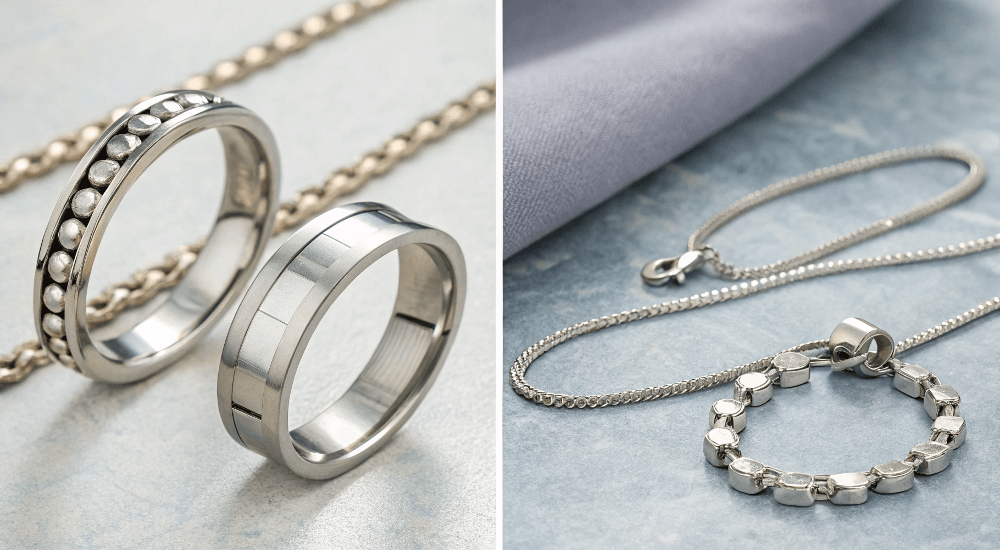
1. What is the Difference Between Titanium and Stainless Steel Jewelry?
The debate between titanium and stainless steel jewelry often comes down to properties, price, and customer preferences. Let’s start by looking at their essential characteristics.
Titanium is known for being lightweight, strong, and resistant to corrosion, making it ideal for everyday wear. It’s hypoallergenic, meaning it’s suitable for people with sensitive skin. On the other hand, stainless steel is a sturdy, affordable option that’s widely used for a variety of jewelry styles. It is durable, resistant to tarnishing, and offers a glossy finish that many customers love.
When comparing both materials, it’s crucial to look at aspects such as durability, weight, price, and design flexibility.
Titanium Jewelry
Titanium is a non-corrosive metal that resists scratches and tarnish. Its strength-to-weight ratio makes it one of the strongest materials available in jewelry making. Titanium jewelry is particularly popular in men’s jewelry, such as rings and bracelets, due to its masculine appearance and lightweight feel.
Stainless Steel Jewelry
Stainless steel, made from an alloy of steel and chromium, offers robust durability. While slightly heavier than titanium, it is also more affordable, which makes it an attractive option for a wide range of jewelry types. Stainless steel is commonly used in rings, necklaces, and watches, and its shiny finish makes it a versatile choice.
| Feature | Titanium | Stainless Steel |
|---|---|---|
| Weight | Light and comfortable | Heavier but durable |
| Strength | Very strong and resistant | Strong, but not as durable as titanium |
| Corrosion Resistance | Excellent, resists tarnishing | Good, resists tarnish and rust |
| Hypoallergenic | Yes, ideal for sensitive skin | Not necessarily hypoallergenic |
| Cost | Higher | Lower |
2. What Are the Advantages of Titanium Jewelry?
Titanium jewelry has specific advantages that set it apart from other materials. Here’s why you might consider offering titanium jewelry in your business.
Titanium jewelry is lighter than stainless steel, which makes it more comfortable for wearers, especially for items like rings and bracelets. It’s incredibly durable and resists corrosion, ensuring that it maintains its appearance over time. The fact that it is hypoallergenic is a massive advantage for customers with sensitive skin, as they can wear titanium jewelry without fear of irritation.
Why Customers Love Titanium
Many customers appreciate the modern, sleek look of titanium, which pairs well with both casual and formal outfits. Its lightweight nature also makes it ideal for jewelry that needs to be worn for long periods, such as engagement rings or wedding bands. Additionally, titanium’s resistance to scratches makes it perfect for everyday wear, as it remains in pristine condition for longer.
| Advantage | Titanium Jewelry |
|---|---|
| Comfort | Lighter and more comfortable |
| Durability | Very strong and scratch-resistant |
| Hypoallergenic | Ideal for people with sensitive skin |
| Modern Look | Sleek and contemporary appearance |
3. What Are the Benefits of Stainless Steel Jewelry?
Stainless steel is a more affordable alternative to titanium, but it still offers several benefits. Let’s explore why this material is widely used in the jewelry industry.
Stainless steel jewelry is highly durable and resistant to corrosion, making it suitable for everyday wear. It’s also relatively easy to maintain, which appeals to customers looking for low-maintenance jewelry. Additionally, stainless steel is highly versatile, allowing for a wide range of design options, from bold statement pieces to delicate designs.
Cost-Effectiveness and Versatility
Stainless steel jewelry offers great value for the price, making it a popular choice for businesses that want to offer quality jewelry at an affordable cost. Its versatility in design also means it can cater to various customer preferences, from modern minimalist pieces to more intricate designs.
| Benefit | Stainless Steel Jewelry |
|---|---|
| Durability | Strong and resistant to corrosion |
| Maintenance | Easy to clean and maintain |
| Design Options | Highly versatile in design |
| Affordability | Lower cost compared to titanium |
4. Which Material is Better for Jewelry Durability?
When it comes to durability, both titanium and stainless steel have strengths, but there are distinct differences that may affect your decision.
Titanium is known for its superior strength-to-weight ratio. It is incredibly durable and resistant to scratches, tarnishing, and corrosion. This makes it an excellent choice for long-lasting jewelry pieces that need to withstand daily wear, like wedding rings or bracelets. It is a perfect material for pieces that are exposed to rough conditions and frequent use. However, while titanium is tough, it is also relatively more prone to bending under extreme pressure compared to stainless steel.
Stainless steel, while slightly less strong in terms of weight-to-strength ratio, is still extremely durable. It is harder and less prone to bending under pressure. Stainless steel resists corrosion well and retains its finish longer than titanium, especially in humid or salty environments. That said, stainless steel can show wear over time, with scratches becoming more visible, though this can often be polished out.
| Durability Factor | Titanium | Stainless Steel |
|---|---|---|
| Scratch Resistance | Excellent | Good |
| Corrosion Resistance | Excellent | Good |
| Resistance to Bending | Good but can bend under extreme force | Strong and resistant to bending |
| Long-Term Wear | Highly durable and retains finish | Durable, but shows more wear over time |
5. How Do Titanium and Stainless Steel Compare in Terms of Weight?
Weight plays an important role in jewelry design and comfort. Titanium is known for being much lighter than stainless steel, which makes it a popular choice for items like rings, bracelets, and necklaces. Jewelry made from titanium can be worn for longer periods without causing discomfort due to its lightness.
Stainless steel, on the other hand, is significantly heavier. This weight can give pieces a sense of substance and strength, which may be desirable for certain types of jewelry, such as large statement rings or pendants. However, for customers who prefer lightweight jewelry or those who wear their pieces every day, titanium may be a better choice.
Comfort Factor
The comfort of wearing jewelry for long periods largely depends on weight. Titanium’s lightweight nature makes it an ideal material for daily-wear items, such as engagement rings, where comfort is key. Stainless steel’s weight gives it a more substantial feel but can be less comfortable if worn for long durations.
| Weight Comparison | Titanium | Stainless Steel |
|---|---|---|
| Comfort for Daily Wear | Very light and comfortable | Heavier and can feel substantial |
| Appearance | Sleek and light | Substantial and strong look |
| Ideal Jewelry Type | Rings, bracelets, earrings for daily wear | Larger pieces, bold designs |
6. How Does the Price of Titanium Compare to Stainless Steel Jewelry?
Price is a significant factor in the decision-making process, especially for businesses aiming to offer value to customers. Titanium jewelry is typically more expensive than stainless steel, primarily due to the higher cost of titanium itself and the complex manufacturing process involved in shaping the material.
Stainless steel, by comparison, is more affordable. The lower production costs and the relative abundance of steel make it a more budget-friendly option. This makes stainless steel an excellent choice for businesses looking to offer high-quality jewelry at a lower price point, particularly for mass-market items.
While titanium offers excellent value for its durability and hypoallergenic properties, stainless steel allows for greater flexibility in pricing, which could be an advantage for those looking to cater to a wider audience.
| Pricing Comparison | Titanium | Stainless Steel |
|---|---|---|
| Material Cost | Higher due to titanium’s rarity and processing complexity | Lower, more widely available |
| Affordability | More expensive | Affordable and budget-friendly |
| Suitable Business Model | High-end, luxury brands | Mass-market or cost-effective jewelry |
7. What Are the Aesthetic Differences Between Titanium and Stainless Steel Jewelry?
Both titanium and stainless steel are highly versatile metals that can be used for a wide range of jewelry designs. However, the aesthetic appeal of each metal differs slightly.
Titanium has a matte finish and a natural grey color, which gives it a modern, sleek look. This makes titanium jewelry stand out, especially when used in minimalist or contemporary designs. The matte texture allows for deeper, more intricate designs with a more understated elegance. Titanium’s finish is less likely to change or tarnish over time, maintaining its appearance for years.
Stainless steel, on the other hand, tends to have a shiny, polished finish that catches light beautifully. Its bright, reflective surface gives stainless steel jewelry a bold, more classic look. Stainless steel is often used for pieces that require high shine, such as watches or statement rings.
Design Preferences
When it comes to design, titanium’s matte, sleek finish works best for modern, minimalist styles, while stainless steel shines in traditional and classic designs. Both materials offer flexibility, but your target market and brand aesthetic will influence which material is the better choice for your jewelry line.
| Aesthetic Feature | Titanium | Stainless Steel |
|---|---|---|
| Finish | Matte, understated elegance | Shiny, reflective, bold look |
| Popular Design Type | Modern, minimalist styles | Classic, timeless designs |
| Long-Term Appearance | Maintains matte finish | Shiny finish may require polishing over time |
8. Is Titanium Jewelry Hypoallergenic?
Titanium is well-known for being hypoallergenic, making it an ideal choice for people with sensitive skin or metal allergies. Unlike other metals, titanium is non-reactive and does not cause irritation or discomfort, even when worn for long periods.
This hypoallergenic property is one of the main reasons why titanium is used in medical devices, such as surgical implants. For jewelry, it’s particularly beneficial for people who may experience allergic reactions to materials like nickel or copper, which are often found in traditional jewelry metals.
Why Hypoallergenic Jewelry Matters
For businesses, offering titanium jewelry can help cater to a wider range of customers, including those with specific skin sensitivities. By promoting titanium as a hypoallergenic alternative, you can attract customers who prioritize skin comfort alongside style.
| Hypoallergenic Factor | Titanium | Stainless Steel |
|---|---|---|
| Skin Sensitivity | Hypoallergenic, ideal for sensitive skin | Can cause irritation for some people |
| Long-Wear Comfort | No allergic reactions, comfortable for long wear | May cause irritation with prolonged contact |
9. How Do Titanium and Stainless Steel Jewelry Compare for Customization?
Customization is a crucial factor for customers looking for unique and personalized jewelry. Both titanium and stainless steel can be customized, but there are differences in how they respond to various techniques.
Titanium is more challenging to work with when it comes to intricate designs, as it requires specialized tools and equipment due to its hardness. However, the results are highly durable, and custom titanium jewelry pieces are often regarded as premium and exclusive. Engraving and adding gemstones to titanium pieces can be more complex, but the outcome is often worth the extra effort.
Stainless steel, being easier to work with, offers a broader range of customization options. It is more malleable and can be shaped and engraved more easily than titanium. Adding designs, engraving logos, or inlaying gemstones into stainless steel is relatively simple, making it a popular choice for mass customization. Stainless steel’s affordability also allows for larger orders of custom-designed jewelry at a lower cost.
Customization and Market Appeal
For businesses looking to offer high-end, custom jewelry with a sense of exclusivity, titanium is the ideal material. However, for those aiming to create a wide range of custom designs at affordable prices, stainless steel is the more practical choice.
| Customization Feature | Titanium | Stainless Steel |
|---|---|---|
| Ease of Customization | More difficult, requires specialized tools | Easier to work with, more malleable |
| Common Techniques | Limited engraving and gemstone inlays | Easier engraving and gemstone setting |
| Ideal Market | High-end, exclusive designs | Affordable custom designs for large orders |
10. Which Material is More Sustainable: Titanium or Stainless Steel?
Sustainability is an increasingly important consideration in today’s jewelry market. Both titanium and stainless steel have their environmental advantages and challenges.
Titanium is a highly sustainable metal because it is abundant and recyclable. The mining process for titanium is less harmful to the environment compared to other metals, and titanium is completely recyclable, meaning it can be reused without losing its properties. This makes it a more sustainable choice in the long run.
Stainless steel, while also recyclable, has a more energy-intensive production process. The production of stainless steel involves the extraction of raw materials and complex processing steps, which can have a greater environmental impact. However, it is still considered relatively eco-friendly compared to other metals like gold or silver, and its recyclability helps mitigate environmental concerns.
Sustainability Considerations for Jewelry Businesses
For businesses aiming to position themselves as eco-conscious, promoting titanium’s sustainability can attract environmentally-aware customers. However, stainless steel remains a good alternative if you are looking for a more affordable yet recyclable material.
| Sustainability Factor | Titanium | Stainless Steel |
|---|---|---|
| Environmental Impact | Low-impact, sustainable mining | Energy-intensive production process |
| Recyclability | 100% recyclable | Recyclable, but more energy-consuming |
| Ideal for Eco-Friendly Brands | Best choice for sustainable jewelry lines | Good for businesses aiming for eco-conscious appeal |
11. What Are the Best Types of Jewelry Made from Titanium?
Titanium is often chosen for jewelry that requires durability, strength, and comfort. Here are the best types of jewelry commonly made from titanium:
- Rings: Titanium rings are highly popular for weddings and engagement rings due to their durability and lightweight feel. The material holds its shape and finish even after years of wear.
- Bracelets: Titanium bracelets are also a great choice for those looking for a sturdy yet lightweight accessory. Their resistance to corrosion makes them ideal for everyday wear.
- Necklaces and Earrings: While less common, titanium is also used in necklaces and earrings, especially for those looking for a modern, sleek design.
Titanium jewelry is especially attractive to customers who want a piece that will last without being too heavy.
| Jewelry Type | Titanium | Ideal Use |
|---|---|---|
| Rings | Durable, lightweight, resistant to tarnish | Wedding bands, engagement rings |
| Bracelets | Strong, comfortable for long wear | Everyday bracelets, men’s jewelry |
| Necklaces and Earrings | Sleek and modern design | Minimalist or modern styles |
12. What Are the Best Types of Jewelry Made from Stainless Steel?
Stainless steel offers great versatility for different types of jewelry. It’s a material used for both everyday wear and fashion-forward pieces.
- Rings: Stainless steel rings are known for their shine and durability. These rings can be worn daily and are available in a variety of designs, from minimalist to statement pieces.
- Necklaces and Bracelets: Stainless steel necklaces and bracelets are highly popular due to their versatility in design and ability to maintain their shine. They are easy to maintain and resist tarnishing.
- Watches: Stainless steel is the go-to material for watches due to its durability, resistance to corrosion, and stylish appearance.
The affordability and ease of customization make stainless steel jewelry a popular choice across different markets.
| Jewelry Type | Stainless Steel | Ideal Use |
|---|---|---|
| Rings | Shiny, durable, and stylish | Everyday wear, fashion-forward rings |
| Necklaces and Bracelets | Versatile, resistant to tarnish | Daily wear, fashion accessories |
| Watches | Strong, sleek, and corrosion-resistant | Luxury and everyday watches |
13. How Do You Care for Titanium Jewelry?
Titanium jewelry is relatively low-maintenance due to its resistance to tarnishing and corrosion. However, regular cleaning can help maintain its shine and appearance.
To clean titanium jewelry, simply use a mild soap solution and a soft cloth. Avoid using harsh chemicals or abrasive materials, as they can scratch the surface. Titanium’s resistance to scratches makes it easy to care for, but it’s still a good idea to store it in a safe, dry place to prevent any potential damage.
Care Tips for Long-Term Wear
Since titanium doesn’t tarnish or corrode easily, it doesn’t require frequent maintenance. Just make sure to clean it occasionally to keep it looking its best.
| Care Factor | Titanium | Maintenance Tips |
|---|---|---|
| Tarnish Resistance | Excellent, doesn’t tarnish easily | Clean with mild soap solution |
| Scratch Resistance | High, resists scratches | Avoid abrasive surfaces |
| Storage | Store in a dry place to avoid damage | Keep away from harsh chemicals |
14. How Do You Care for Stainless Steel Jewelry?
Stainless steel is also low-maintenance, but it can benefit from regular cleaning and care to maintain its shiny finish. To clean stainless steel, use warm water with soap and a soft cloth. Stainless steel can tarnish over time if exposed to harsh chemicals, so it’s important to avoid contact with cleaning agents or perfumes.
Preventing Scratches
While stainless steel is durable, it can still develop scratches with prolonged wear. Be mindful of where you store the jewelry, as it can scratch when in contact with other hard surfaces.
| Care Factor | Stainless Steel | Maintenance Tips |
|---|---|---|
| Tarnish Resistance | Resists tarnish but can tarnish over time | Clean with soap and water |
| Scratch Resistance | Less resistant than titanium | Keep away from hard surfaces |
| Storage | Store in a soft cloth bag or case | Avoid exposure to harsh chemicals |
15. Which Material is the Best Choice for Your Jewelry Business?
Choosing the right material depends on your target audience, business goals, and price range. If you are targeting high-end customers looking for durable, hypoallergenic jewelry, titanium is the clear choice. It offers superior quality and exclusivity.
For businesses focusing on affordability and wide-ranging design options, stainless steel is a fantastic option. It is versatile, easy to work with, and affordable, making it suitable for larger-scale production.
The decision ultimately boils down to the market you serve and the value you want to offer your customers. Both materials have their merits, and the best choice depends on your business’s unique needs.
| Material | Best for Business Type | Key Considerations |
|---|---|---|
| Titanium | High-end, exclusive brands | Durability, hypoallergenic, premium pricing |
| Stainless Steel | Mass-market, affordable brands | Affordability, versatility, wide appeal |
Conclusion
Both titanium and stainless steel jewelry have their unique advantages. Titanium stands out for its strength, lightness, and hypoallergenic properties, making it ideal for customers with sensitive skin or those seeking durable, high-performance jewelry. Stainless steel, on the other hand, is a more affordable option that offers durability and versatility. Ultimately, the best choice for your business depends on your target market, budget, and design preferences.
FAQ
- Q1: What is Titanium Jewelry?
Titanium jewelry is made from a lightweight, strong metal that is hypoallergenic and resistant to corrosion, making it ideal for daily wear. - Q2: How does Titanium Jewelry compare to Stainless Steel Jewelry?
Titanium is lighter, more hypoallergenic, and resistant to scratches, while stainless steel is more affordable and versatile in design. - Q3: Is Titanium Jewelry suitable for all skin types?
Yes, titanium is hypoallergenic, which makes it ideal for people with sensitive skin or metal allergies. - Q4: Is Stainless Steel Jewelry durable enough for everyday wear?
Yes, stainless steel is highly durable, resistant to tarnish and scratches, and suitable for daily use. - Q5: Which is more affordable: Titanium or Stainless Steel Jewelry?
Stainless steel is typically more affordable than titanium due to the cost of the materials and manufacturing processes.


