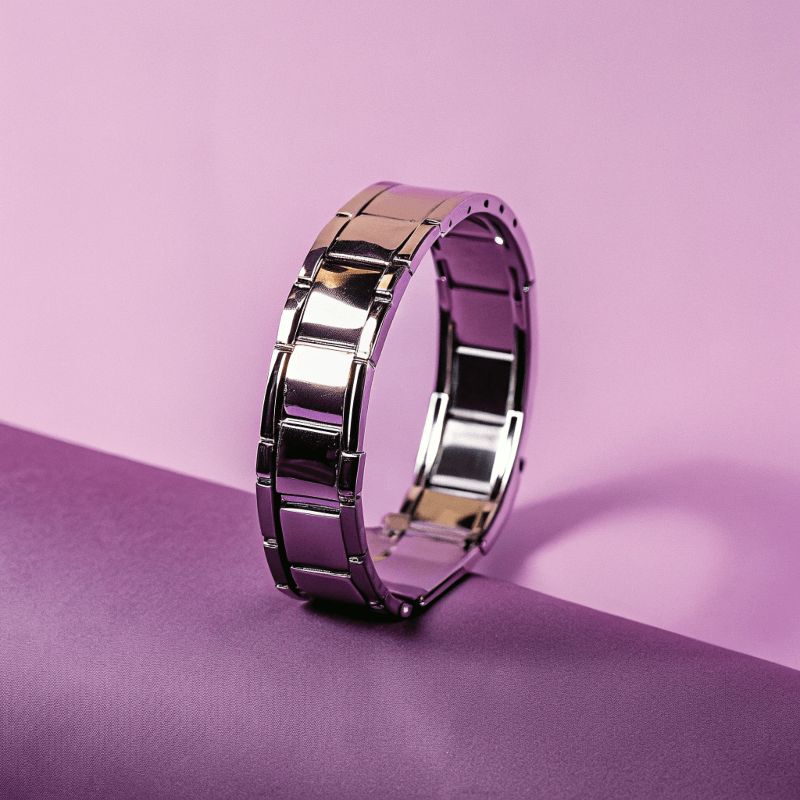
Quick Answer: How Does 316L Stainless Steel Compare with Other Jewelry Materials?
316L stainless steel is a practical jewelry material for brands and buyers who need durability, corrosion resistance, low maintenance, and a modern appearance at a more accessible cost than precious metals.
Compared with sterling silver, gold, titanium, platinum, and tungsten, 316L stainless steel is often chosen for everyday jewelry, wholesale collections, PVD plated designs, and custom fashion jewelry. However, the best material depends on the product style, target price, skin sensitivity, finish, and intended use.
| Material | Main Strength | Main Limitation |
|---|---|---|
| 316L Stainless Steel | Durable, corrosion-resistant, low maintenance | Less precious-metal appeal than gold or platinum |
| 304 Stainless Steel | Affordable and widely available | Lower corrosion resistance than 316L |
| Sterling Silver | Classic precious-metal appearance | Tarnishes and needs more care |
| Gold | Luxury value and prestige | Higher cost and softer in high-purity forms |
| Titanium | Lightweight and strong | Harder to work with for some jewelry designs |
| Tungsten | Very hard and scratch-resistant | Brittle and less flexible for detailed designs |
What Is 316L Stainless Steel Jewelry?
316L stainless steel is a corrosion-resistant stainless steel alloy commonly used in jewelry, watches, medical tools, and other products that need durability and long-term wear resistance. In jewelry, it is widely used for necklaces, rings, bracelets, earrings, bangles, and body jewelry.
The “316L” grade contains chromium, nickel, and molybdenum. These elements help improve resistance to corrosion, especially compared with some lower stainless steel grades. For finished jewelry, actual performance also depends on polishing, plating, stones, construction, and daily care.
316L stainless steel is often selected for fashion jewelry and wholesale collections because it offers a balance of durability, cost control, low maintenance, and modern appearance.
316L Stainless Steel vs. Other Jewelry Materials
316 Stainless Steel vs. 304 Stainless Steel
Both 316L and 304 stainless steel are used in durable products, but 316L offers stronger corrosion resistance because of its molybdenum content. For jewelry exposed to sweat, moisture, and daily wear, 316L is generally the better choice.Both 316L and 304 stainless steel are used in durable products, but 316L offers stronger corrosion resistance because of its molybdenum content. For jewelry exposed to sweat, moisture, and daily wear, 316L is generally the better choice.
316 Stainless Steel vs. Sterling Silver
Sterling silver has a classic precious-metal appearance, but it can tarnish and usually requires more care. 316L stainless steel is more resistant to daily wear, moisture, and tarnish, making it practical for low-maintenance jewelry collections.
316 Stainless Steel vs. Gold (Yellow, White, and Rose)
Gold offers luxury value and strong market recognition, but high-purity gold is softer and more expensive. 316L stainless steel does not have the same precious-metal status, but it provides durability and affordability for everyday jewelry.
316 Stainless Steel vs. Titanium
Titanium is lightweight, strong, and often suitable for sensitive-skin jewelry. However, it can be harder to process for some detailed designs. 316L stainless steel offers broader design flexibility, strong durability, and easier large-scale production.
316 Stainless Steel vs. Platinum
Platinum is prestigious, dense, and valuable, but it is also expensive. 316L stainless steel is not a luxury precious metal, but it can deliver a clean modern look and strong everyday durability at a much lower cost.
316 Stainless Steel vs. Tungsten
Tungsten is extremely hard and scratch-resistant, but it can be brittle and less suitable for flexible or detailed jewelry designs. 316L stainless steel offers a better balance of strength, flexibility, weight, and design versatility.
How to Choose the Right Jewelry Material
| Factor | What to Consider |
|---|---|
| Skin compatibility | 316L stainless steel generally works well for many wearers, but individual sensitivity may vary because stainless steel can contain nickel. |
| Durability | 316L stainless steel is strong and suitable for everyday wear, while softer metals may scratch or deform more easily. |
| Maintenance | Stainless steel is low maintenance, while silver and some precious metals may require more regular polishing and care. |
| Cost | 316L stainless steel is usually more affordable than gold, platinum, and many fine jewelry materials. |
| Product positioning | Precious metals may suit luxury jewelry, while 316L stainless steel is strong for fashion, wholesale, and daily-wear collections. |
| Custom production | 316L stainless steel supports PVD plating, engraving, logos, packaging, and scalable OEM/ODM production. |
Pros and Cons of 316L Stainless Steel Jewelry
Pros
- High Corrosion Resistance:
Suitable for everyday jewelry exposed to sweat, moisture, and normal wear. - Durability:
Stronger and more resistant to deformation than many softer jewelry metals. - Customizable: Can support PVD colors, engraving, logos, and private label packaging.
- Cost-Effective:
Offers a durable metal option at a lower cost than many precious metals. - Low Maintenance:
Does not require the same regular polishing as sterling silver.
Cons
- Less precious-metal appeal: It does not carry the same luxury status as gold, platinum, or sterling silver.
- Can contain nickel: Many wearers tolerate 316L well, but people with known nickel sensitivity should review material details carefully.
- Heavier than titanium: It may feel heavier than lightweight materials such as titanium.
- Not ideal for every design: Some fine jewelry buyers may still prefer precious metals for luxury positioning.
For a deeper look at 316L material, PVD finishes, wholesale sourcing, and custom production, read our 316L Stainless Steel Jewelry: Wholesale & Custom Manufacturing Guide.
Final Answer: Is 316L Stainless Steel a Good Jewelry Material?
316L stainless steel is a strong choice for jewelry when durability, corrosion resistance, low maintenance, and cost control are important. Compared with sterling silver, gold, titanium, platinum, and tungsten, it offers a practical balance of quality, value, and production flexibility.
It is not the most luxurious material, and it is not the best choice for every buyer. However, for everyday jewelry, wholesale collections, PVD plated designs, and custom fashion jewelry, 316L stainless steel is one of the most practical material options.
Looking for durable 316L stainless steel jewelry for wholesale or custom production? Share your product type, plating color, target quantity, logo, and packaging requirements.
FAQ
Is 316L stainless steel good for jewelry?
Yes. 316L stainless steel is widely used for jewelry because it is durable, corrosion-resistant, low maintenance, and suitable for everyday designs such as necklaces, rings, bracelets, earrings, and bangles.
Is 316L stainless steel better than sterling silver?
It depends on the purpose. 316L stainless steel is usually more durable and lower maintenance, while sterling silver has a classic precious-metal appearance but can tarnish and require more care.
Is 316L stainless steel better than 304 stainless steel for jewelry?
For many jewelry uses, 316L is preferred because it offers stronger corrosion resistance than 304 stainless steel. This makes it a practical choice for jewelry exposed to sweat, moisture, and daily wear.
Does 316L stainless steel jewelry tarnish or rust?
316L stainless steel has strong resistance to tarnish and corrosion under normal jewelry-wearing conditions. However, harsh chemicals, saltwater, chlorine, poor plating, or improper care can still affect finished jewelry over time.
Is 316L stainless steel hypoallergenic?
316L stainless steel generally has good skin compatibility for many wearers, but it is not guaranteed to be suitable for every person. Stainless steel can contain nickel, so people with known metal allergies should review material details carefully.
Can 316L stainless steel jewelry be customized?
Yes. 316L stainless steel jewelry can be customized with PVD plating, engraving, logos, stone settings, private label cards, packaging, and OEM/ODM production requirements.