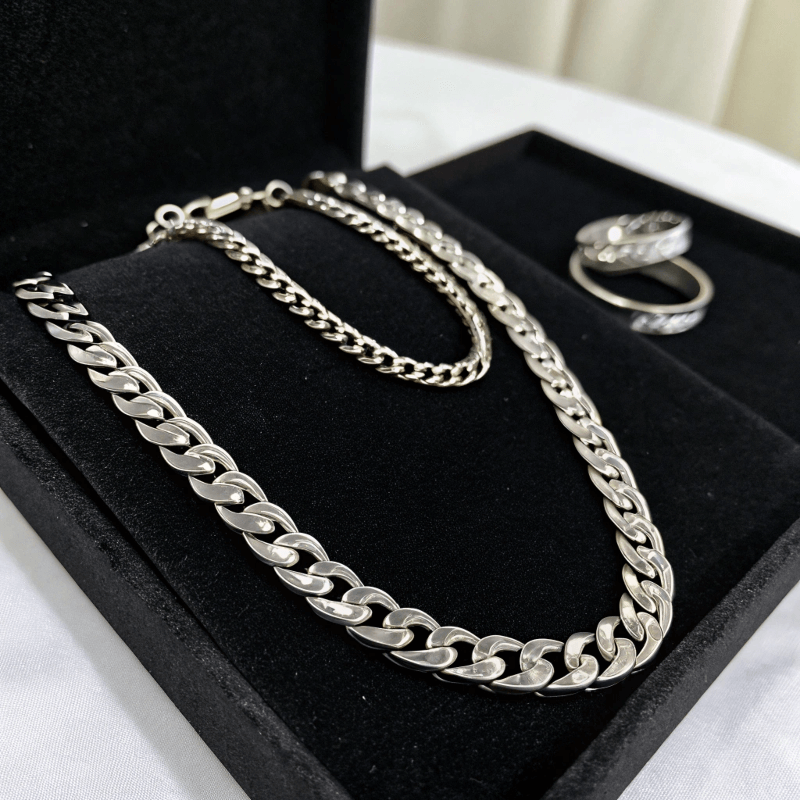
When choosing jewelry, two popular options are silver and stainless steel. The main concern for many buyers is understanding which material offers better durability, value, and style. Let’s break down the key differences between silver and stainless steel jewelry to help you make an informed decision.
Silver jewelry is made from a precious metal, often associated with luxury and timeless appeal, while stainless steel is known for its durability and resistance to wear and tear. But which material is better for your needs?
In this article, we will compare silver and stainless steel jewelry across various factors such as cost, appearance, durability, weight, and more. By the end, you’ll have a clearer understanding of which one suits your preferences and lifestyle.

1. What Are Silver and Stainless Steel Jewelry Made Of?
Silver jewelry is primarily made from sterling silver, a blend of 92.5% pure silver mixed with other metals for added strength. On the other hand, stainless steel jewelry is made from a mix of iron, chromium, nickel, and other metals, offering a high level of strength and resistance to corrosion.
What makes silver unique is its luster, which is often desired for its gleaming appearance. Stainless steel, however, stands out for its industrial aesthetic and remarkable durability.
Here’s a breakdown of their compositions and key characteristics:
| Material | Composition | Key Characteristics |
|---|---|---|
| Silver | 92.5% silver, 7.5% copper or other metals | Soft, shiny, tarnishes over time, requires maintenance |
| Stainless Steel | Primarily iron, 10-30% chromium, nickel, and other metals | Strong, resistant to corrosion, easy to maintain |
2. How Do Silver and Stainless Steel Jewelry Differ in Appearance?
When it comes to aesthetics, silver is prized for its shiny, white appearance, which makes it a popular choice for a wide range of jewelry pieces, from rings to necklaces. Stainless steel, though less reflective, has a sleek, metallic look that is favored in modern and industrial designs.
Silver has a warmer, classic appeal, while stainless steel’s cool, shiny finish suits a more contemporary, bold style.
For example, silver is ideal for pieces that require intricate detailing or a vintage vibe, while stainless steel is commonly used in bold, minimalistic designs that highlight clean lines.
| Aspect | Silver | Stainless Steel |
|---|---|---|
| Color | Bright white, shiny, can tarnish over time | Cool metallic, maintains shine |
| Aesthetic Style | Classic, traditional, vintage | Modern, industrial, minimalistic |
| Common Uses | Rings, bracelets, earrings, pendants | Rings, watches, cufflinks, chains |
3. What Are the Strength and Durability Differences Between Silver and Stainless Steel?
Silver jewelry is relatively soft compared to stainless steel, making it prone to scratches and dents over time. Stainless steel is much harder and more durable, offering superior resistance to wear, scratches, and corrosion.
Over time, silver will tarnish due to exposure to air and moisture, whereas stainless steel remains unaffected by such environmental factors.
| Durability Aspect | Silver | Stainless Steel |
|---|---|---|
| Resistance to Scratches | Prone to scratches | Very resistant to scratches |
| Tarnishing | Tarnishes over time, needs regular polishing | Doesn’t tarnish or rust |
| Corrosion Resistance | Low resistance to moisture and air | Highly resistant to moisture and air |
4. How Much Does Silver Jewelry Cost Compared to Stainless Steel Jewelry?
Silver is generally more expensive due to its precious metal status. The cost of silver jewelry depends on factors such as the weight of the piece, its craftsmanship, and the purity of the silver used. Stainless steel, however, is more affordable due to its widespread availability and lower production costs.
While silver may carry a higher price tag, it’s important to consider the durability and maintenance costs. Stainless steel’s initial low cost is often outweighed by its long-lasting nature, requiring little maintenance.
| Material | Price Range | Long-Term Value |
|---|---|---|
| Silver | Higher, due to its precious metal nature | Requires regular maintenance to preserve its shine |
| Stainless Steel | More affordable | Long-lasting, minimal maintenance needed |
5. How Does Weight Impact the Comfort of Silver vs Stainless Steel Jewelry?
Silver is a much lighter metal compared to stainless steel, making silver jewelry more comfortable for daily wear. Stainless steel, being heavier, may feel bulkier, but it provides a sturdier feel, which some people prefer for larger pieces such as watches or cufflinks.
The weight of your jewelry ultimately comes down to personal preference. Lighter silver may be better for those who wear jewelry all day, while the heavier feel of stainless steel suits those who prefer a more substantial, durable piece.
| Material | Weight | Comfort for Daily Wear |
|---|---|---|
| Silver | Light, comfortable | Great for delicate, everyday pieces |
| Stainless Steel | Heavier, sturdier feel | Preferred for bulkier pieces like watches |
6. Which Material is Better for Hypoallergenic Jewelry?
When it comes to hypoallergenic properties, stainless steel is the clear winner. Stainless steel is highly resistant to causing allergic reactions due to its chromium and nickel content, which makes it less likely to irritate sensitive skin. Silver, while a precious metal, can sometimes cause reactions for those with nickel allergies, especially if mixed with other metals such as copper or nickel.
Stainless steel is typically regarded as hypoallergenic, making it ideal for individuals with sensitive skin or metal allergies. Silver may be a good option for most people, but it’s always a good idea to check the alloy composition.
| Material | Hypoallergenic Properties | Best For |
|---|---|---|
| Silver | Can cause allergic reactions for people with nickel sensitivities | General wear, but not ideal for sensitive skin |
| Stainless Steel | Highly hypoallergenic, resistant to skin irritation | Ideal for individuals with sensitive skin |
7. How Does Silver Jewelry Age Over Time?
Silver jewelry, while beautiful, does not have the same longevity as stainless steel. Over time, silver will tarnish and lose its shine, especially when exposed to air and moisture. This means that silver requires regular polishing to maintain its appeal. However, with proper care, silver jewelry can last for generations, often becoming even more cherished as it ages and takes on a unique patina.
Unlike stainless steel, silver’s soft nature means it can get scratched or bent more easily, but it remains a timeless choice for collectors.
| Aging Aspect | Silver | Stainless Steel |
|---|---|---|
| Tarnishing | Tarnishes over time, requires regular polishing | Does not tarnish, retains its shine |
| Scratch Resistance | Easily scratched and can lose its shine | Highly resistant to scratches and wear |
| Aging Appearance | Develops patina with age, making it unique | Maintains its sleek appearance over time |
8. How Does Stainless Steel Jewelry Age Over Time?
Stainless steel is well-known for its ability to withstand the test of time. Due to its corrosion resistance, stainless steel jewelry doesn’t tarnish or rust. It also doesn’t require frequent polishing and is relatively low-maintenance compared to silver. Over time, stainless steel may develop some minor scratches, but it will not lose its luster, making it a favorite for those seeking long-term durability.
Stainless steel’s long-lasting nature means it’s often the go-to choice for daily wear jewelry that’s built to last.
| Aging Aspect | Silver | Stainless Steel |
|---|---|---|
| Tarnishing | Tarnishes, requiring maintenance | No tarnishing, stays shiny |
| Scratch Resistance | Easily scratched and dented | Highly scratch-resistant |
| Appearance Over Time | Becomes unique with age, patina develops | Remains sleek and modern |
9. How Are Silver and Stainless Steel Jewelry Produced?
The production processes of silver and stainless steel jewelry differ significantly. Silver jewelry typically involves more traditional, labor-intensive methods like casting, stamping, and forging, especially for high-end pieces. Stainless steel, in contrast, is produced using modern industrial methods such as casting, die-stamping, and laser cutting, which allow for greater precision and mass production.
Silver’s production often requires skilled craftsmanship, whereas stainless steel production is faster and more cost-effective.
| Aspect | Silver | Stainless Steel |
|---|---|---|
| Production Method | Labor-intensive processes like casting, stamping, forging | Fast, industrial methods like die-stamping, laser cutting |
| Craftsmanship | Requires skilled artisans for intricate designs | More automated, minimal craftsmanship required |
| Cost of Production | Higher due to precious metal and craftsmanship | Lower due to mass production techniques |
10. Which Material is More Popular in the Jewelry Industry?
Silver has been a popular choice for jewelry for centuries. Its appeal lies in its traditional value, versatility, and lustrous shine. Stainless steel, however, has gained a lot of ground in recent years, particularly for more modern, industrial designs. It is favored for its durability and minimal maintenance, making it a popular choice for everyday jewelry.
Both materials are popular, but the growing trend towards durable and low-maintenance pieces has made stainless steel a strong contender in the market.
| Material | Historical Popularity | Current Popularity |
|---|---|---|
| Silver | Long-standing, highly valued in jewelry-making | Still popular for fine jewelry, but losing ground to stainless steel |
| Stainless Steel | Gaining popularity for its practicality and design flexibility | Increasingly popular for fashion, casual, and luxury wear |
11. How Customizable Are Silver and Stainless Steel Jewelry Pieces?
Silver jewelry is highly customizable due to its malleability. It can be easily molded, engraved, and shaped into intricate designs, making it perfect for personalized, high-end pieces. Stainless steel, while still customizable, is more challenging to work with because of its hardness. This often requires special tools for engraving or shaping.
For highly intricate, one-of-a-kind jewelry, silver is the preferred choice, while stainless steel is used for simpler, durable designs.
| Material | Customization | Best For |
|---|---|---|
| Silver | Easy to mold, engrave, and customize | Intricate, personalized, high-end pieces |
| Stainless Steel | Requires specialized tools for customization | Bold, durable, mass-produced designs |
12. What Are the Environmental Considerations for Silver and Stainless Steel Jewelry?
Silver mining has significant environmental impacts, including habitat destruction, pollution, and high energy consumption. While there are efforts to make silver mining more sustainable, it still has a larger carbon footprint compared to stainless steel. Stainless steel, being made from more widely available materials like iron, has a relatively lower environmental impact, especially when recycled.
If sustainability is a priority, stainless steel may be the better choice, but recycled silver offers a more eco-friendly option compared to newly mined silver.
| Material | Environmental Impact | Sustainability |
|---|---|---|
| Silver | Mining causes environmental damage | Recycling silver helps reduce the impact |
| Stainless Steel | Lower impact, more recyclable | Recyclable, but still has an environmental footprint |
13. Which Material is More Affordable for Jewelry Makers?
Silver jewelry is generally more expensive to produce due to the high cost of raw silver and the craftsmanship involved in creating intricate designs. Stainless steel is more affordable to manufacture because of its lower raw material cost and more efficient production methods. This makes stainless steel jewelry a great option for jewelry makers looking to offer affordable pieces with high durability.
For jewelry makers aiming for high-end or custom pieces, silver is the ideal choice, while stainless steel is better for offering trendy, budget-friendly designs.
| Material | Cost of Production | Best for Jewelry Makers |
|---|---|---|
| Silver | High, due to the cost of raw material and craftsmanship | High-end, custom, intricate designs |
| Stainless Steel | Low, due to efficient production processes | Budget-friendly, mass-produced designs |
14. How Do You Care for Silver Jewelry?
To maintain silver’s shine, it’s important to clean it regularly and store it in a dry place. Use a soft cloth to polish silver jewelry and remove any tarnish. Avoid exposing silver to harsh chemicals or perfumes. For long-term storage, keep silver pieces in anti-tarnish pouches or boxes.
By following simple care instructions, silver jewelry can retain its luster for many years.
| Care Aspect | Silver Jewelry | Stainless Steel Jewelry |
|---|---|---|
| Cleaning | Clean regularly to prevent tarnish | Wipe with a soft cloth when needed |
| Storage | Store in a dry, cool place, preferably in anti-tarnish pouches | Store in a dry, safe location |
| Exposure | Avoid exposure to chemicals and moisture | Resistant to corrosion and moisture |
15. How Do You Care for Stainless Steel Jewelry?
Stainless steel is one of the easiest materials to care for. Simply wipe it with a soft cloth to keep its shine. If it gets scratched, use a polishing cloth specifically designed for stainless steel to buff it out. Avoid exposure to harsh chemicals, but stainless steel is more resistant to damage from everyday use compared to silver.
Stainless steel is a durable material that requires minimal maintenance, making it ideal for people who prefer low-maintenance jewelry.
| Care Aspect | Silver Jewelry | Stainless Steel Jewelry |
|---|---|---|
| Cleaning | Clean regularly to prevent tarnish | Wipe with a soft cloth |
| Storage | Store in a dry, cool place, preferably in anti-tarnish pouches | Can be stored in a regular jewelry box |
| Exposure | Avoid exposure to chemicals and moisture | More resistant to chemicals and moisture |
Conclusion
In conclusion, both silver and stainless steel jewelry have their unique advantages. Silver offers a timeless appeal with its classic shine but requires maintenance and is more prone to wear. Stainless steel, on the other hand, is durable, affordable, and highly resistant to tarnish, making it perfect for those seeking a low-maintenance option.
Choosing between the two depends on your style preferences, budget, and how much maintenance you are willing to do for your jewelry. Both materials have their place in the jewelry world, offering a wide range of options for all tastes and needs.
FAQ Section
Q1: What is the difference between silver and stainless steel jewelry?
Silver is a soft, precious metal that requires maintenance, while stainless steel is a strong, corrosion-resistant alloy that is easy to care for.
Q2: Which material is more durable, silver or stainless steel?
Stainless steel is significantly more durable than silver, offering resistance to scratches, tarnishing, and corrosion.
Q3: Is silver jewelry more expensive than stainless steel?
Yes, silver jewelry is generally more expensive due to the cost of silver, while stainless steel is more affordable.
Q4: Which material is better for people with sensitive skin?
Stainless steel is hypoallergenic and a better option for people with sensitive skin compared to silver, which can sometimes cause irritation.
Q5: How do I clean silver and stainless steel jewelry?
Silver jewelry requires regular cleaning to prevent tarnishing, while stainless steel only needs occasional cleaning to maintain its shine.