For a long time, men’s jewelry was simple. A wedding ring, a wristwatch, maybe a chain — and that was it. Today, things look very different. Men are wearing jewelry more confidently than ever before, using rings, necklaces, bracelets, and earrings to express their personality and lifestyle. But with this growing interest comes a question many men never had to think about until now:
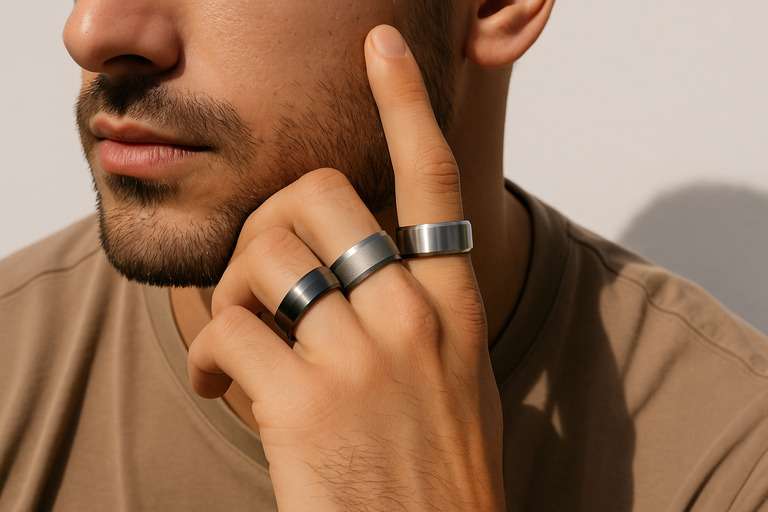
What metal is actually best for men’s jewelry?
If you’ve ever looked at jewelry options and felt lost when you saw words like 316L stainless steel, tungsten carbide, or titanium, you’re not alone. These materials sound like something from an engineering textbook, not a fashion catalog. Yet the truth is simple: the metal you choose determines how your jewelry looks, feels, lasts — and how well it fits into your life.
Men’s Jewelry Today: Why Material Matters More Than Ever
Men today wear jewelry everywhere — at the gym, at work, traveling, swimming, or just moving through daily life. Unlike delicate accessories worn occasionally, men’s jewelry tends to stay on through sweat, water, friction, and impact. That means the material must be strong, comfortable, and reliable.
But material also affects identity.
Some men prefer jewelry that feels bold and substantial.
Others prefer something light and barely noticeable.
Some need hypoallergenic safety, while others want low maintenance.
This is where 316L stainless steel, tungsten, and titanium stand out. Each offers a different type of strength, comfort, and visual presence.
316L Stainless Steel: The Everyday Essential
If we had to choose one metal that fits modern life with ease, it would be 316L stainless steel.
What makes it special is the way it balances everything:
- Strong enough for daily wear
- Light enough to stay comfortable
- Doesn’t rust or tarnish
- Doesn’t require polishing
- Handles sweat, water, and travel effortlessly
Whether you’re showering, working out, or traveling, 316L quietly performs without demanding attention.
Thanks to PVD coating, it also offers durable gold, black, and rose finishes, making it suitable for both classic and modern styles.
316L is the metal you forget about because it simply works.
Tungsten: The Bold, Unshakable Statement
If 316L is the quiet, reliable friend, tungsten is the presence you immediately notice.
A tungsten ring feels different from the moment you hold it:
- Heavy and solid
- Deep mirror-like shine
- Almost impossible to scratch
Tungsten offers one of the strongest visual impressions in men’s jewelry.
However, its extreme hardness comes with a trade-off:
tungsten can crack under a sharp impact because it does not bend.
It’s not ideal for all types of jewelry, but for:
- Wedding bands,
- Statement rings,
- Bold masculine designs
tungsten is unmatched.
Titanium: Strength Without the Weight
Titanium is the opposite personality of tungsten — light, subtle, and incredibly comfortable.
Many men react the same way when they try titanium for the first time:
“Is it really on my finger?”
Even though it feels weightless, titanium is:
- Very strong
- Highly dent-resistant
- Extremely hypoallergenic (medical-grade safety)
- Modern and minimal in appearance
Titanium’s matte, understated look fits perfectly with a clean, minimalist lifestyle.
It is the ideal choice for men who want jewelry that moves effortlessly with them, whether during workouts, travel, or long workdays.
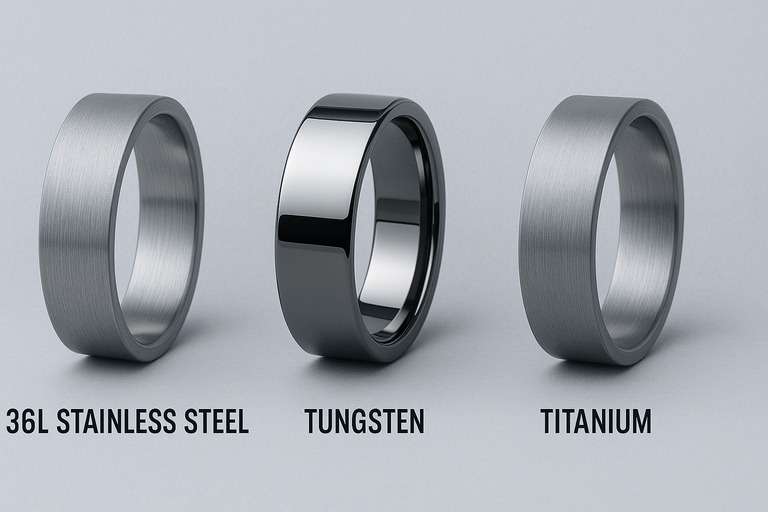
How They Compare in Real Life
Durability
- 316L stainless steel resists bending and daily wear extremely well.
- Tungsten is nearly scratch-proof but can crack under severe impact.
- Titanium is strong and dent-resistant, but may gain light marks over time.
Weight
- 316L has a balanced weight — noticeable but comfortable.
- Tungsten feels heavy and substantial.
- Titanium is extremely lightweight.
Comfort
- 316L suits most everyday situations.
- Tungsten feels bold but may be heavy for some.
- Titanium offers the best long-term comfort.
Skin Safety
- 316L is safe for most skin types.
- Tungsten is safe when nickel-bonded (avoid cobalt versions).
- Titanium is the best choice for sensitive or allergy-prone skin.
Style
- 316L = versatile, modern, adaptable.
- Tungsten = bold, polished, masculine.
- Titanium = minimal, subtle, contemporary.

Choosing the Right Metal for Your Lifestyle
In the end, the best metal is the one that naturally fits your life.
Choose 316L stainless steel if:
- You want something stylish, durable, and low-maintenance
- You want a metal that works for all types of jewelry
- You want effortless daily wear
Choose tungsten if:
- You want a heavy, bold, masculine ringYou want something almost impossible to scratch
- You want a statement wedding band
Choose titanium if:
- You want something lightweight and comfortable
- You have sensitive skin
- You prefer minimalist, modern jewelry
- You want a metal you can wear all day and forget it’s there
At the end of the day:
You don’t choose a metal to impress someone else — you choose the one that feels right to you.
Final Thoughts: Your Jewelry Should Feel Like Part of You
A great piece of jewelry doesn’t just sit on your skin — it becomes part of your everyday rhythm. The right metal makes that possible.
- 316L stainless steel gives you everyday reliability and modern style.
- Tungsten gives you power, presence, and extreme scratch resistance.
- Titanium gives you comfort, lightness, and skin-friendly performance.
There is no universal “best” metal — only the best one for your lifestyle, your habits, and your personality.
When you choose the material that matches you, your jewelry becomes more than decoration.
It becomes a quiet, constant part of your story.
Call to Action
If you’re exploring men’s jewelry and want pieces that fit your lifestyle — whether bold, lightweight, or everyday-ready — we’re here to help. Our collection includes 316L stainless steel, tungsten, and titanium designs crafted for real-world comfort and style. If you’d like to see more, compare materials, or find the perfect fit, feel free to reach out. We’re always happy to recommend pieces based on your needs.
FAQs
Which metal is the most durable for men’s jewelry?
All three metals are durable, but in different ways. Tungsten is the most scratch-resistant, titanium is extremely strong and lightweight, and 316L stainless steel offers balanced everyday durability.
Will any of these metals tarnish or rust over time?
316L stainless steel and titanium will not rust or tarnish. Tungsten also maintains its shine, though low-quality tungsten may dull over time. All three are excellent for daily wear.
Which metal is best for sensitive skin?
Titanium is the safest option for sensitive or allergy-prone skin. 316L stainless steel is also hypoallergenic for most people. Tungsten is safe as long as you choose nickel-bonded, not cobalt-bonded, versions.
Is tungsten really scratch-proof?
Tungsten carbide is extremely scratch-resistant—one of the hardest materials used in jewelry. However, it can crack or shatter if hit with enough force because it doesn’t bend.
Which metal is the most comfortable to wear all day?
Titanium is the most comfortable for long-term wear because it’s extremely lightweight. 316L stainless steel has a balanced weight, while tungsten is heavy and may not be ideal for long periods.
What’s the difference in weight between these metals?
Tungsten is the heaviest, 316L sits in the middle, and titanium is the lightest. The weight difference is noticeable—especially with rings.