Stainless steel jewelry is a popular choice for many people, known for its durability and sleek appearance. But does it contain nickel? Let’s explore this important question together.
Stainless steel jewelry often contains nickel as part of the alloy mix. However, there are also nickel-free options available. Understanding the nickel content in your jewelry is essential for avoiding potential allergic reactions.
When it comes to stainless steel jewelry, it’s crucial to be aware of its composition. Some individuals may have nickel allergies, and knowing whether your jewelry contains this metal can help you avoid unwanted reactions.
1. What is Stainless Steel Jewelry?
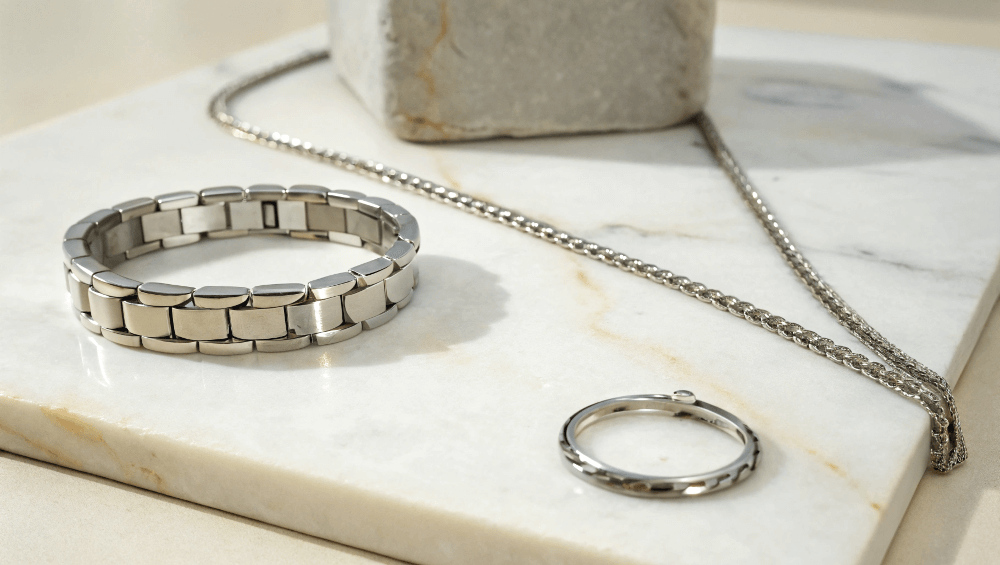
Stainless steel jewelry has become increasingly popular due to its sleek look and excellent durability. But what exactly is stainless steel jewelry made of?
Stainless steel jewelry is crafted from a metal alloy primarily composed of iron, carbon, and chromium. It’s known for its resistance to rust, corrosion, and tarnishing.
Stainless steel has a long history of being used in various applications, from kitchen utensils to industrial tools. Its versatility makes it a preferred choice for crafting jewelry, as it maintains its shine and strength over time. However, the composition of stainless steel can vary, and one important element that often makes an appearance is nickel.
What Are the Common Types of Stainless Steel Used in Jewelry?
There are several different grades of stainless steel used in jewelry making. The most common are 304 and 316L stainless steel. These grades are typically combined with nickel to enhance their corrosion resistance and durability. Here’s a quick look at these grades:
| Stainless Steel Grade | Nickel Content | Characteristics |
|---|---|---|
| 304 | 8-10% | Commonly used in kitchen utensils and jewelry |
| 316L | 10-14% | Highly resistant to corrosion, commonly used in body piercings |
What Makes Stainless Steel Jewelry Different from Other Metals?
When comparing stainless steel to other jewelry metals like silver, gold, or titanium, it’s important to understand how its properties impact both the price and quality of the jewelry.
Stainless steel jewelry is more affordable compared to precious metals, but it can offer comparable durability and visual appeal.
While silver and gold jewelry might tarnish or corrode over time, stainless steel doesn’t face these issues. Its corrosion resistance comes from chromium, but nickel also plays a role in this characteristic.
| Metal Type | Price Range | Durability | Resistance to Corrosion | Aesthetic Appeal |
|---|---|---|---|---|
| Stainless Steel | Low | High | Excellent | Shiny, sleek |
| Silver | Medium | Moderate | Moderate | Classic, shiny |
| Gold | High | High | Moderate | Luxurious, yellowish |
| Titanium | Medium | Very High | Excellent | Light, grayish |
2. What Makes Stainless Steel Jewelry Different from Other Metals?
When comparing stainless steel to other jewelry metals like silver, gold, or titanium, it’s important to understand how its properties impact both the price and quality of the jewelry.
Stainless steel jewelry is more affordable compared to precious metals, but it can offer comparable durability and visual appeal.
While silver and gold jewelry might tarnish or corrode over time, stainless steel doesn’t face these issues. Its corrosion resistance comes from chromium, but nickel also plays a role in this characteristic.
| Metal Type | Price Range | Durability | Resistance to Corrosion | Aesthetic Appeal |
|---|---|---|---|---|
| Stainless Steel | Low | High | Excellent | Shiny, sleek |
| Silver | Medium | Moderate | Moderate | Classic, shiny |
| Gold | High | High | Moderate | Luxurious, yellowish |
| Titanium | Medium | Very High | Excellent | Light, grayish |
3. Does Stainless Steel Jewelry Contain Nickel?
Now that we know a little more about stainless steel, let’s answer the main question: does stainless steel jewelry contain nickel?
Yes, most stainless steel jewelry contains nickel. However, some types of stainless steel are manufactured to be nickel-free, which is an important consideration for people with allergies.
Nickel is often used in stainless steel jewelry to enhance its strength and corrosion resistance. However, for those with nickel allergies, it can be problematic. Understanding which pieces of jewelry contain nickel and which do not is crucial for health reasons.
What Types of Stainless Steel Jewelry May Contain Nickel?
Nickel is a common component of many stainless steel alloys, especially in the grades commonly used for jewelry. While grades like 304 and 316L stainless steel do contain nickel, there are alternatives that offer nickel-free options.
| Type of Jewelry | Nickel Content | Alloys Used |
|---|---|---|
| Regular Stainless Steel Jewelry | 8-14% | 304, 316L |
| Nickel-Free Stainless Steel Jewelry | 0% | 430, Titanium Alloys |
4. Why is Nickel Used in Stainless Steel Jewelry?
Nickel is used in stainless steel jewelry for several reasons. It helps to increase the metal’s hardness and resistance to corrosion. The addition of nickel gives the jewelry a shiny appearance and helps it last longer without tarnishing.
Nickel contributes to the shiny appearance and durability of stainless steel jewelry.
Without nickel, stainless steel jewelry wouldn’t have the same resistance to tarnishing, rust, or corrosion. However, the use of nickel can be a concern for people with sensitive skin or nickel allergies.
| Benefit | Reason for Using Nickel |
|---|---|
| Increased Durability | Nickel enhances hardness and resistance to corrosion |
| Shiny Appearance | Nickel gives a reflective and polished look |
| Long-lasting | Reduces tarnishing and wear over time |
5. How to Identify if Stainless Steel Jewelry Contains Nickel?
So, how can you determine whether your stainless steel jewelry contains nickel?
You can identify nickel in stainless steel jewelry by checking for certifications, labels, or conducting tests.
Some manufacturers provide information about the nickel content in their jewelry, while others may advertise their products as “nickel-free” to cater to those with allergies. Additionally, there are simple tests you can do at home to determine the presence of nickel.
Methods for Testing Jewelry for Nickel
To test jewelry for nickel content, you can purchase at-home nickel testing kits. These kits typically contain a solution that reacts with the metal to indicate the presence of nickel. Alternatively, you can visit a jeweler or use a professional testing service.
| Method | Description |
|---|---|
| Nickel Testing Kit | Home kits with a solution that reacts with nickel |
| Professional Testing | Jewelry stores or labs can test for nickel content |
| Labeling | Check product labeling or certifications for nickel-free claims |
6. What Are the Health Risks of Nickel in Jewelry?
Nickel allergies are among the most common contact allergies, and they can cause discomfort and skin reactions. Understanding the health risks of nickel in jewelry can help you make informed decisions when buying jewelry.
Nickel in jewelry can cause allergic reactions, leading to symptoms like itching, rashes, and swelling. For some individuals, the reaction can be severe.
When nickel comes into direct contact with the skin, it can trigger a range of allergic responses. These reactions occur because the immune system mistakenly identifies nickel as a harmful substance, causing irritation and inflammation. Individuals with a nickel allergy may need to avoid wearing jewelry that contains nickel to prevent these uncomfortable symptoms.
| Health Risk | Symptoms of Allergy | Recommended Action |
|---|---|---|
| Itching | Red, itchy rash on skin | Remove jewelry immediately |
| Swelling | Inflammation of the affected area | Consult a healthcare professional if symptoms persist |
| Contact Dermatitis | Blisters or scabs on the skin | Choose nickel-free jewelry or hypoallergenic alternatives |
7. What Are Nickel-Free Stainless Steel Jewelry Options?
For individuals with nickel allergies, there are several options available to avoid nickel exposure. Nickel-free stainless steel jewelry is designed specifically to provide a safer alternative.
Nickel-free stainless steel jewelry uses alloys that do not contain nickel, making it an ideal choice for people with sensitive skin.
Common nickel-free stainless steel options use alloys such as 430 stainless steel or titanium. These metals provide the same durability and visual appeal as regular stainless steel, but without the risk of nickel-induced allergic reactions. Understanding the different types of nickel-free alloys can help you find the best jewelry for your needs.
| Nickel-Free Alloy | Composition | Common Uses |
|---|---|---|
| 430 Stainless Steel | Primarily iron and chromium | Affordable, used in many jewelry items |
| Titanium Alloys | Titanium with small amounts of aluminum or vanadium | High strength, used in premium jewelry |
8. How Can You Protect Yourself from Nickel in Jewelry?
If you have a nickel allergy, taking precautions is essential to avoid reactions. Fortunately, there are several strategies you can use to protect yourself while still enjoying your jewelry.
You can protect yourself from nickel exposure by selecting hypoallergenic jewelry, using barrier coatings, and avoiding contact with certain types of jewelry.
The best way to protect yourself from nickel allergies is by choosing jewelry that is explicitly labeled as nickel-free. You can also apply clear coatings to jewelry to create a barrier between your skin and the metal. In some cases, using a hypoallergenic earring back or necklace clasp can prevent direct skin contact.
| Protection Method | Description | Examples |
|---|---|---|
| Hypoallergenic Jewelry | Jewelry made from nickel-free materials | Titanium, platinum, surgical steel |
| Barrier Coatings | Clear coatings that block nickel exposure | Coating sprays for jewelry |
| Nickel-Free Clasps | Jewelry fasteners made from hypoallergenic materials | Plastic or titanium clasps for necklaces and bracelets |
9. How Does the Manufacturing Process Affect Nickel Content?
The manufacturing process plays a significant role in determining whether stainless steel jewelry contains nickel. The methods used to make the jewelry can influence the final composition of the metal.
The way stainless steel is alloyed affects the nickel content, and manufacturers can control the amount of nickel used based on the desired properties of the final product.
In some cases, manufacturers intentionally avoid adding nickel in order to cater to consumers with allergies. In other instances, nickel is essential for achieving the metal’s desired qualities, such as its strength and durability. Understanding the manufacturing process can help you identify jewelry that meets your specific needs.
| Manufacturing Step | Impact on Nickel Content | Potential Alloys Used |
|---|---|---|
| Alloy Mixing | Determines how much nickel is added | 304, 316L stainless steel |
| Heat Treatment | Affects the final composition and strength | Nickel-free options may undergo special treatments |
| Certification | Ensures nickel-free claims are accurate | Certification for hypoallergenic products |
10. How Does the Price of Stainless Steel Jewelry Relate to Nickel Content?
The price of stainless steel jewelry can be influenced by several factors, including the presence of nickel. Nickel plays a critical role in the quality and durability of the jewelry, which can affect the price point.
Jewelry containing higher levels of nickel tends to be priced higher due to its enhanced strength and resistance to corrosion. However, nickel-free options may cost more due to their specialized manufacturing.
Stainless steel jewelry with high nickel content is typically more durable and resistant to wear, which can justify a higher price. On the other hand, nickel-free alternatives may cost more to produce, as special alloys or manufacturing processes are required to achieve a nickel-free product.
| Jewelry Type | Price Range | Nickel Content | Durability |
|---|---|---|---|
| Regular Stainless Steel | Low-Medium | 8-14% | High |
| Nickel-Free Stainless Steel | Medium-High | 0% | High |
| Premium Jewelry (e.g., Gold, Platinum) | High | Varies | Very High |
11. Can Stainless Steel Jewelry Be 100% Nickel-Free?
While it’s possible to create stainless steel jewelry with no nickel, achieving 100% nickel-free jewelry can be challenging. Most stainless steel alloys do contain some amount of nickel.
While 100% nickel-free stainless steel is rare, several nickel-free alloys offer an excellent alternative.
Manufacturers can reduce the nickel content to very low levels, but it may not be completely absent in some cases. However, there are high-quality, nickel-free options available for those with severe allergies, including titanium and certain steel alloys.
| Metal Type | Nickel Content | Advantages | Common Uses |
|---|---|---|---|
| 100% Nickel-Free Steel | 0% | Ideal for sensitive skin | Premium jewelry, medical implants |
| Titanium Alloys | 0-1% | Strong, hypoallergenic | Body piercings, rings |
12. Is Stainless Steel Jewelry Safe for Everyone?
For most people, stainless steel jewelry is perfectly safe. However, for those with a nickel allergy, wearing stainless steel can cause discomfort and irritation.
Stainless steel jewelry is generally safe for most people, but individuals with nickel allergies should be cautious and opt for nickel-free alternatives.
If you’re unsure whether you have a nickel allergy, consult with a healthcare professional. For those who experience skin reactions, it’s recommended to choose hypoallergenic jewelry made from materials like titanium, platinum, or certain grades of stainless steel.
| Jewelry Type | Safe for Nickel Allergies | Recommended Alternative |
|---|---|---|
| Stainless Steel Jewelry | No | Nickel-Free Alloys, Titanium, Platinum |
| Hypoallergenic Jewelry | Yes | Titanium, Surgical Steel |
13. How to Clean Stainless Steel Jewelry to Prevent Nickel Exposure?
Proper cleaning and maintenance of stainless steel jewelry are essential for preventing nickel exposure and ensuring that your jewelry lasts.
Cleaning your stainless steel jewelry regularly can help remove any nickel residue that might cause irritation.
To clean stainless steel jewelry, use a soft cloth and mild soap solution. Avoid harsh chemicals that may strip the protective layer of the jewelry. For pieces that might have nickel buildup, using a barrier coating can help protect your skin from irritation.
| Cleaning Method | Materials Needed | Frequency |
|---|---|---|
| Mild Soap & Water | Soft cloth, warm water | Weekly or as needed |
| Jewelry Cleaner | Non-abrasive jewelry cleaner | Monthly |
14. Are There Any Alternatives to Stainless Steel Jewelry for People with Nickel Allergies?
If stainless steel jewelry is not an option due to nickel allergies, there are several other metals to consider. Many alternatives offer similar benefits without the risk of allergic reactions.
Metals like titanium, surgical steel, and platinum are excellent alternatives for those who cannot wear nickel-containing jewelry.
These metals are hypoallergenic, durable, and provide a similar aesthetic to stainless steel, making them great choices for people with sensitive skin.
| Alternative Metal | Characteristics | Advantages |
|---|---|---|
| Titanium | Light, strong | Hypoallergenic, corrosion-resistant |
| Surgical Steel | Durable, resistant to corrosion | Ideal for sensitive skin, widely used in medical applications |
| Platinum | Dense, shiny | Very hypoallergenic, luxurious |
15. What Should You Do If You Have a Reaction to Nickel in Jewelry?
If you experience a reaction to nickel in jewelry, it’s important to take the right steps to minimize discomfort and manage the allergy.
If you experience a reaction, remove the jewelry and clean the affected area. Seek medical advice if symptoms persist.
For those with a severe allergy, it’s best to avoid wearing any jewelry that contains nickel. You may also want to consider using barrier coatings or switching to nickel-free jewelry entirely.
| Step | Action | Timeframe |
|---|---|---|
| Remove Jewelry | Take off the jewelry immediately | As soon as symptoms appear |
| Clean Affected Area | Wash with mild soap and water | ASAP |
| Seek Medical Help | Consult a doctor if reaction persists | Within 24-48 hours |
Conclusion
Understanding whether your stainless steel jewelry contains nickel is important for both health and aesthetic reasons. While many stainless steel pieces do contain nickel, options are available for those seeking nickel-free alternatives. If you’re prone to nickel allergies, it’s essential to choose jewelry that suits your skin sensitivity.
By being aware of the materials in your jewelry, you can enjoy the benefits of stainless steel while minimizing any potential discomfort or allergic reactions.
FAQ Section
Q1: What is stainless steel jewelry?
Stainless steel jewelry is made from an alloy of iron, carbon, and chromium, known for its resistance to tarnishing and corrosion.
Q2: How can I know if my stainless steel jewelry contains nickel?
You can check product labels or certifications, or use at-home testing kits to detect nickel content in jewelry.
Q3: Why is nickel used in stainless steel jewelry?
Nickel enhances the durability, strength, and corrosion resistance of stainless steel, while also contributing to its shiny appearance.
Q4: What should I do if I experience a reaction to nickel in jewelry?
If you experience an allergic reaction, remove the jewelry immediately and consult a healthcare professional if necessary.
Q5: Are there alternatives to stainless steel for people with nickel allergies?
Yes, metals like titanium, surgical steel, and other hypoallergenic options are ideal for people with nickel sensitivities.