
Pricing jewelry as a designer can be tricky. You want to make sure your pieces are affordable, but you also need to account for costs, labor, and materials. The formula you use will determine your profits and business sustainability.
You might be wondering how to create the perfect pricing formula that ensures profitability while keeping your customers happy. Here’s the deal: by factoring in costs such as materials, labor, and overhead, you can develop a formula that works for you.
In this post, we’ll break down the key elements of jewelry pricing and help you create a formula that fits your unique designs and business goals.
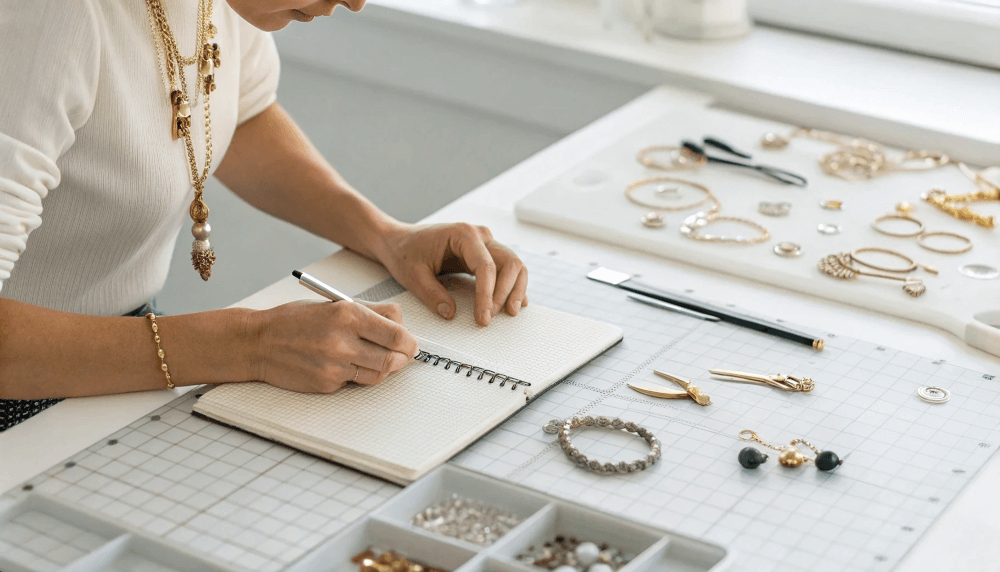
1. Why is Jewelry Pricing Important for Designers?
Jewelry pricing plays a pivotal role in your business success. Whether you’re a new designer or a seasoned pro, setting the right price for your jewelry is crucial to attracting the right customers and making a profit.
Pricing influences how customers perceive your designs. It impacts how they view the quality, the craftsmanship, and even the value of your brand. A price that’s too low can make your products seem cheap, while a price that’s too high might push potential customers away.
Here’s the deal: Setting the right price isn’t just about making a profit; it’s about ensuring your jewelry is positioned appropriately in the market. Price it too low, and you may lose out on potential revenue. Price it too high, and you may not sell as much as you’d like.
What Is the Role of Pricing in Jewelry Design?
● Setting clear expectations for customers\
● Establishing the perceived value of your designs\
● Understanding the impact of competition\
● Attracting the right type of customer
Why You Should Care About Pricing
Pricing isn’t just a number; it’s an integral part of your business model. If you’re not sure how to calculate the right price, it might be time to revisit your approach.\
Now, let’s dive deeper into how to calculate jewelry pricing and all the factors that affect it.
Table: Key Factors Affecting Jewelry Pricing
| Factor | Description | Example |
|---|---|---|
| Material Cost | Direct cost of materials used in jewelry | Gold, silver, gemstones |
| Labor Cost | Cost of time spent creating the jewelry | Designer’s hourly rate or flat fees |
| Overhead | Business expenses such as rent, utilities, etc. | Marketing, rent, packaging, shipping, equipment |
2. What Factors Should Be Considered in Jewelry Pricing?
To accurately price your jewelry, you need to take several factors into account. It’s not just about the cost of materials; you also need to think about labor, overhead, and the market you’re selling to.
If you’re not considering all the variables, you might be underpricing or overpricing your jewelry. Here’s a simple breakdown of factors that go into pricing:
- Materials
- Labor
- Overhead
- Market research
Material Costs
Materials are often the most significant part of your jewelry’s cost. The quality of your metals, gemstones, and other materials directly affects your pricing.
Labor Costs
Labor is another essential factor to consider. Time is money, and your time spent crafting jewelry needs to be reflected in the price. For intricate designs, labor costs will be higher than for simpler pieces.
Overhead
Don’t forget to account for your business expenses like rent, utilities, equipment, and marketing. These indirect costs should be incorporated into your pricing formula.
Table: Example of Material Costs
| Material | Average Cost per Unit | Pricing Impact |
|---|---|---|
| Gold | $50–$60 per gram | High |
| Silver | $0.50–$1.00 per gram | Moderate |
| Copper | $0.01–$0.05 per gram | Low |
Let’s continue to explore the specifics of calculating these factors.
3. How Do You Calculate Jewelry Pricing Using a Formula?
Pricing jewelry accurately requires a formula that includes all your costs plus your desired profit. The right formula will make sure you cover all your expenses while still generating a profit.
Here’s a quick guide on how to calculate your jewelry price:
- Material cost
- Labor cost
- Overhead costs
- Profit margin
For instance, if the materials for your piece cost $50, the labor is $100, and overhead is $30, and you want a profit margin of 30%, your pricing formula would be:
Total Price = (Material + Labor + Overhead) × (1 + Profit Margin)
Let’s break this down further with an example:
- Material: $50
- Labor: $100
- Overhead: $30
- Profit margin: 30%
Total Price = ($50 + $100 + $30) × (1 + 0.30) = $180 × 1.30 = $234
Now that you know the basic formula, let’s go deeper into how labor costs can impact your pricing.
Table: Example Pricing Formula Breakdown
| Cost Component | Value | Calculation |
|---|---|---|
| Material | $50 | – |
| Labor | $100 | – |
| Overhead | $30 | – |
| Profit Margin | 30% | (Material + Labor + Overhead) × 1.30 |
| Total Price | $234 | ($50 + $100 + $30) × 1.30 |
4. How Does Material Quality Affect Jewelry Pricing?
The quality of materials plays a huge role in how much you should price your jewelry. High-quality materials, like gold, platinum, or rare gemstones, will naturally increase the cost and value of your pieces. It’s important to understand how each material affects pricing to make sure your jewelry is priced appropriately.
Here’s the deal: Not all materials are created equal, and the type of material you use will impact both the cost of production and the final price.
Precious vs. Non-Precious Materials
● Precious materials like gold, silver, and diamonds tend to be more expensive.\
● Non-precious materials like copper or glass may lower the production cost but also impact the perceived value.
Let’s take a look at how different materials affect pricing:
Table: Impact of Different Materials on Pricing
| Material | Average Price per Unit | Impact on Pricing |
|---|---|---|
| Gold | $50–$60 per gram | High |
| Silver | $0.50–$1.00 per gram | Moderate |
| Copper | $0.01–$0.05 per gram | Low |
| Diamonds | $2,000–$20,000 per carat | Very High |
The quality of the materials impacts not just the cost, but also the way your customers perceive your designs. High-quality materials often lead to higher expectations for craftsmanship and value.
5. How Should Labor Costs Be Incorporated into Pricing?
Labor is a significant part of the total cost in jewelry production, especially if you’re designing custom pieces or intricate designs. Labor costs vary depending on the complexity of the piece, the designer’s experience, and the time spent crafting each piece.
Here’s the deal: Labor is not just about time. It’s about the skill and artistry required to bring a design to life.
Calculating Labor Costs
● Flat fee vs. hourly rate\
● Time required for each piece\
● Complexity of design and techniques used
If you’re designing a custom piece, your labor cost could be higher due to the intricate details and the time spent perfecting the design.
Table: Labor Costs Based on Design Complexity
| Design Complexity | Time Required | Hourly Rate | Total Labor Cost |
|---|---|---|---|
| Simple | 2 hours | $30 | $60 |
| Intermediate | 4 hours | $30 | $120 |
| Complex | 6 hours | $40 | $240 |
By understanding how labor costs contribute to the total price, you can ensure that you are adequately compensating for your work while maintaining a fair price for your customers.
6. What Overhead Costs Should Jewelry Designers Include?
Overhead costs are often overlooked but can significantly impact your jewelry pricing. These are the indirect costs associated with running your business, such as:
- Rent
- Utilities
- Marketing
- Shipping and packaging
While overhead costs might not directly relate to the jewelry itself, they still play a major role in determining how much you need to charge to cover all expenses.
Here’s the deal: These costs need to be added to the price of each piece to ensure you’re staying profitable.
Table: Example of Overhead Costs
| Overhead Item | Monthly Cost | Price Per Jewelry Piece |
|---|---|---|
| Rent | $1,200 | $12 |
| Utilities | $200 | $2 |
| Marketing | $500 | $5 |
To ensure your business remains profitable, it’s crucial to account for these overheads in your jewelry pricing formula.
7. How Do You Price Jewelry for Wholesale vs. Retail?
The pricing strategy for wholesale and retail differs due to the nature of the transactions and customer expectations. Wholesale pricing typically involves selling jewelry in bulk at a lower unit price, while retail pricing caters to individual customers with higher unit prices.
If you’re selling directly to consumers, you will need to set retail prices that cover your costs, make a profit, and remain competitive. However, wholesale prices require you to offer bulk buyers lower prices with a higher volume to compensate.
Here’s the deal: Understanding the difference between wholesale and retail pricing is key to ensuring that your business remains profitable while appealing to different types of buyers.
Retail vs. Wholesale Pricing
| Type | Pricing Strategy | Example | Profit Margin |
|---|---|---|---|
| Wholesale | Lower price per unit, higher volume | $100 per piece, bulk order of 50 | 10-20% |
| Retail | Higher price per unit, lower volume | $250 per piece, sold individually | 30-50% |
When pricing for wholesale, remember that your margins will be smaller, but you’ll make up for it with volume. For retail, you can afford higher margins, but the sales volume will be lower.
8. How Can Designers Account for Profit Margins?
Profit margin is the difference between your costs (materials, labor, overhead) and the final selling price. It’s essential for jewelry designers to factor in a reasonable profit margin to ensure their business remains sustainable.
Here’s the deal: A well-calculated profit margin ensures that your jewelry not only covers costs but also generates profit. You don’t want to set your prices too high or too low—strike the right balance for long-term business success.
Calculating Profit Margins
| Cost Component | Amount | Price | Profit Margin |
|---|---|---|---|
| Material Cost | $50 | $200 | 25% |
| Labor Cost | $100 | $250 | 30% |
| Overhead | $50 | $300 | 33% |
A 30% profit margin is a common target in the jewelry industry. However, this can vary based on the type of jewelry you design and the market you’re selling in.
9. How Should You Factor in the Market Trends for Jewelry Pricing?
Market trends can significantly influence jewelry pricing. Staying aware of current trends helps designers set competitive prices while ensuring they are offering something that aligns with consumer expectations.
Here’s the deal: Prices should reflect not only the cost of production but also the demand for certain styles, materials, or gemstones. If a trend involves using sustainable materials, for example, it might justify a higher price.
Understanding Market Trends
| Trend | Impact on Pricing | Example |
|---|---|---|
| Sustainable Materials | Higher prices, premium demand | Recycled gold, lab-grown diamonds |
| Popular Gemstones | Price increase due to demand | Colored sapphires, emeralds |
| Limited Editions | Higher prices, exclusivity | One-of-a-kind pieces |
Keep in mind that the jewelry market is constantly evolving. Pricing accordingly can give you an edge over competitors who are slow to adapt.
10. What Is the Role of Competitor Analysis in Jewelry Pricing?
Competitor analysis helps you understand how similar jewelry is priced in the market. By knowing what others are charging, you can set a competitive yet profitable price point for your own designs.
Here’s the deal: If your competitors are offering similar jewelry at a much lower price, you may need to adjust your own pricing strategy. On the other hand, if your competitors charge higher, it might give you room to increase your prices, provided your quality justifies it.
Competitor Pricing Comparison
| Competitor Name | Jewelry Type | Price Range | Position in Market |
|---|---|---|---|
| Brand A | Custom Rings | $150 – $250 | Mid-Range |
| Brand B | Fashion Jewelry | $50 – $100 | Low-End |
| Brand C | Luxury Pieces | $500 – $1000 | High-End |
Looking at how competitors price their jewelry can provide useful insights into what your target market is willing to pay for similar products.
11. How Can Jewelry Designers Adjust Prices Over Time?
As costs and market conditions change, jewelry designers need to periodically adjust their prices. Strategic price adjustments can help businesses remain profitable while accommodating rising costs.
Here’s the deal: Regularly review your pricing strategy to ensure that your prices are still in line with production costs, competitor prices, and customer demand.
Price Adjustment Strategies
| Reason for Adjustment | Action to Take | Example |
|---|---|---|
| Rising Material Costs | Increase prices slightly | Gold price increase by 10% |
| Increased Labor Costs | Raise labor rates and adjust price | Designer hourly rate increase by $5 per hour |
| Seasonal Demand Changes | Offer discounts or limited pricing | Discounted pricing for holiday season |
Price adjustments are inevitable, but careful monitoring and strategic changes can help your business stay competitive and profitable.
12. What Are Common Mistakes to Avoid When Pricing Jewelry?
Pricing mistakes can be costly. Underpricing your jewelry can hurt your business by making it difficult to cover costs, while overpricing may drive away potential customers.
Here’s the deal: It’s essential to calculate all of your costs, consider the market demand, and make sure you are positioning your jewelry correctly in the market.
Common Pricing Mistakes
| Mistake | Consequence | Solution |
|---|---|---|
| Underpricing | Loss of revenue, reduced perceived value | Review costs and set a fair margin |
| Ignoring overhead costs | Not covering business expenses | Always factor in overhead costs |
| Overpricing | Losing potential customers | Monitor competitor pricing and adjust |
Avoid these pricing mistakes to ensure your jewelry is priced fairly and competitively.
13. How Can You Use Technology to Improve Jewelry Pricing?
Technology can simplify the process of pricing jewelry. Using pricing software or tools can help designers quickly calculate costs, analyze competitors, and adjust prices in real-time.
Here’s the deal: Implementing technology can streamline your pricing process, save time, and allow you to focus more on designing and less on manual calculations.
Tools for Pricing Jewelry
| Tool/Software | Features | Benefits |
|---|---|---|
| Jewelry Pricing Calculator | Automatically calculates costs, profits, and margins | Saves time, ensures accuracy |
| Market Analysis Tools | Compares competitor prices in real-time | Helps set competitive pricing strategies |
| Inventory Management Systems | Tracks costs and inventory levels | Ensures prices cover stock and expenses |
Technology can take the guesswork out of pricing, enabling you to set prices quickly and accurately.
14. How Do Custom Jewelry Orders Affect Pricing?
Custom orders require more work, time, and attention to detail. Because of the bespoke nature of these pieces, they often cost more than mass-produced jewelry.
Here’s the deal: Custom designs can demand higher prices due to the personalized service and unique nature of the piece. Be sure to account for these additional costs when pricing custom jewelry.
Custom Jewelry Pricing Factors
| Customization Level | Time Required | Additional Cost | Price Impact |
|---|---|---|---|
| Basic Customization | 4 hours | $50 | +$100 |
| High-End Custom Design | 12 hours | $150 | +$500 |
| One-of-a-Kind Piece | 24 hours | $200 | +$1000 |
Custom jewelry orders require more time and precision, and the price should reflect this.
15. How Can Designers Communicate Pricing to Clients?
Transparency in pricing is essential for maintaining trust with your customers. Clear communication about how jewelry prices are determined ensures that clients understand the value of the designs they’re purchasing.
Here’s the deal: Be upfront with customers about what goes into your pricing formula—materials, labor, and overhead. This transparency builds trust and ensures that customers are willing to pay the asking price.
Communicating Pricing Effectively
| Approach | Benefits | Example |
|---|---|---|
| Breakdown of Costs | Builds trust, ensures transparency | “This necklace costs $200 due to materials ($100), labor ($60), and overhead ($40).” |
| Justifying Value | Increases perceived value | “This is a limited-edition piece, which justifies its higher price.” |
Being transparent and explaining your pricing structure will help customers feel confident in their purchase.
Conclusion
In summary, pricing jewelry effectively requires you to consider several factors including material costs, labor, overhead, and profit margins. By using a pricing formula that integrates all of these elements, you can ensure that your jewelry is not only affordable but also profitable. The key is to find the balance that allows you to meet your business goals while offering competitive pricing to your customers.
FAQ Section
- Q1: What is the jewelry pricing formula for designers?\
The jewelry pricing formula includes the material cost, labor cost, overhead, and desired profit margin. Designers can use this formula to ensure profitability while maintaining competitive pricing. - Q2: How does jewelry pricing impact sales?\
Pricing influences how customers perceive the value of your jewelry. Setting the right price ensures that customers see your products as valuable, which leads to more sales. - Q3: What factors affect jewelry pricing beyond material costs?\
Besides material costs, labor, overhead, and market trends play significant roles in pricing jewelry. Understanding each component will help you set the right price. - Q4: Can jewelry pricing be adjusted over time?\
Yes, jewelry pricing can be adjusted based on changes in material costs, labor rates, or market conditions. Regular price reviews help ensure ongoing profitability. - Q5: How do wholesale and retail pricing differ for jewelry?\
Wholesale pricing typically involves lower margins, while retail pricing includes a markup for individual sales. Retail pricing covers additional expenses like packaging and customer service.


